
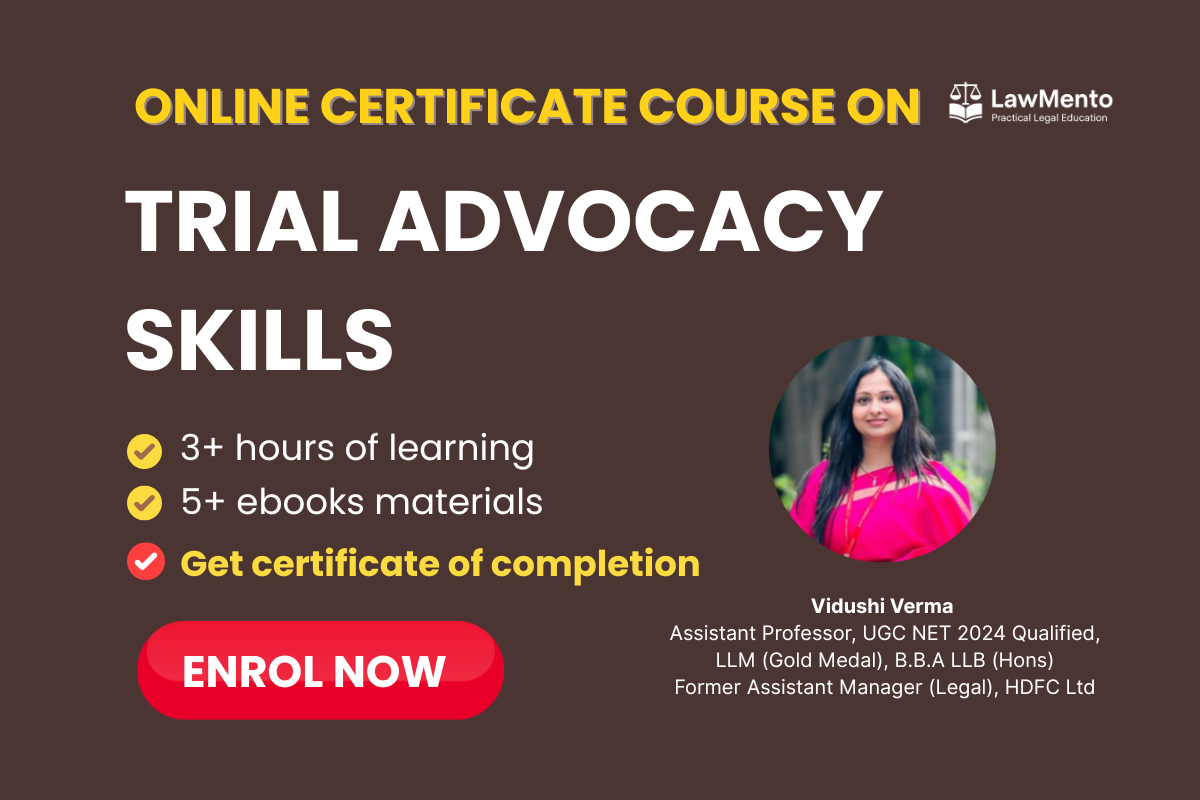
Online Course on Trial Advocacy Skills
Learn how real courtroom advocacy works—from case strategy and trial briefs to examination, cross-examination, objections and final arguments. Build practical advocacy skills for trials and competitions.
About the Online Course on Trial Advocacy Skills
Trial advocacy requires more than knowledge of law. It demands preparation, strategy, persuasive communication and the ability to respond effectively inside a courtroom.
This practical course is designed to help learners understand trial procedure, develop a clear case theory and present arguments with confidence. It explains how advocates prepare for civil and criminal trials and how each stage of a trial connects with the overall case strategy.
The course focuses on hands-on skills such as drafting trial briefs, framing examination-in-chief and cross-examination questions, handling objections, preparing opening and closing statements and presenting final arguments.
It also covers courtroom etiquette and preparation strategies for trial advocacy competitions, making it useful for both academic competitions and early litigation practice.
Key Trial Problems This Course Addresses
- Weak or unclear case theory
- Poorly structured witness questions
- Ineffective cross-examination planning
- Difficulty handling courtroom objections
- Unstructured opening and closing statements
- Lack of confidence in oral advocacy
Build Practical Trial Advocacy Skills
Learn how to prepare, draft, question witnesses, handle objections and argue persuasively in court.
Skills Learners Can Develop
The course helps learners understand and practise the key skills involved in preparing and conducting a trial.
Build a Case Theory
Learn how facts, law, evidence and witness strategy are organised into a clear trial theory.
Prepare Trial Briefs
Understand how to create structured case summaries and written trial preparation documents.
Frame Witness Questions
Draft examination-in-chief questions that present evidence clearly and logically.
Plan Cross-Examination
Develop focused question sets aimed at testing credibility and advancing the case theory.
Handle Objections
Recognise common objections and understand how advocates respond during examination.
Deliver Opening Statements
Structure concise and persuasive openings that introduce the case to the court.
Present Final Arguments
Connect facts, evidence and legal principles in a convincing closing presentation.
Improve Courtroom Presence
Develop professional etiquette, clarity, confidence and effective oral advocacy habits.
Designed for Aspiring and Early-Stage Advocates
Law Students
Useful for undergraduate and postgraduate law students seeking practical courtroom exposure.
Trial Advocacy Participants
Helps students prepare for trial advocacy and related law-school competitions.
Aspiring Litigators
Relevant for learners planning to enter civil, criminal or general litigation practice.
Recent Law Graduates
Supports graduates who want to strengthen practical advocacy before entering court practice.
Corporate Lawyers
Useful for professionals who want a clearer understanding of trial procedure and advocacy.
Practical Skill Learners
Suitable for anyone willing to practise speaking, argumentation and legal problem-solving.
Learn Trial Advocacy Through Strategy, Drafting and Practice
Receive structured lessons, practical resources and one-year access to the complete course.
Trial Advocacy Course Plan
The curriculum moves from the foundations and anatomy of a trial to case strategy, drafting, witness examination, objections and final advocacy.
Module 1: Foundations of Trial Advocacy
Understand the role, purpose and essential skills of a trial advocate.
Module 2: Anatomy of a Trial — Civil and Criminal
Study the main stages and procedural flow of civil and criminal trials.
Module 3: Case Theory and Trial Strategy
Learn how facts, law, evidence and witnesses are organised around a consistent case theory.
Module 4: Drafting for Trial Advocacy
- Drafting a trial brief or case summary
- Drafting examination-in-chief questions
- Drafting cross-examination question sets
- Drafting opening and closing outlines
- Preparing written submissions for arguments
Module 5: Opening Statements
Learn how to introduce the case clearly and persuasively at the beginning of a trial.
Module 6: Examination-in-Chief
Understand how to lead a witness through relevant facts in a structured manner.
Module 7: Cross-Examination Techniques
Study the planning, control and questioning techniques used in effective cross-examination.
Module 8: Objections
Understand common courtroom objections and how advocates respond to them.
Module 9: Evidence and Final Arguments
Connect evidence with the final presentation of facts and law before the court.
Module 10: Courtroom Etiquette and Oral Advocacy Skills
Develop professional conduct, confidence, clarity and persuasive courtroom communication.
Module 11: Preparation Strategy for Trial Advocacy Competitions
Learn how to organise preparation, roles, witness strategy and performance for competitions.
7 Practical Trial Advocacy E-Books
Pre-Trial Preparation Checklist
A structured checklist for organising facts, witnesses, evidence and arguments before trial.
Cross-Examination Planning Sheet
A practical planning tool for creating focused cross-examination themes and questions.
Evidence Admissibility Quick-Check Guide
A quick reference for reviewing basic admissibility issues during preparation.
Trial Advocacy Competition Checklist
A preparation checklist for teams participating in trial advocacy competitions.
Your First 30 Days in a Trial Court
A practical orientation resource for learners entering trial-court practice.
The Anatomy of a Strong Cross-Examination
A focused guide to the structure and purpose of effective cross-examination.
Drafting Like a Trial Lawyer
A practical guide to organising trial documents, questions and written arguments.
Meet the Mentor

Adv. Vidushi Verma
Assistant Professor of Law and UGC NET 2024 qualified. She is an LLM Gold Medallist from NLU Odisha and has 4+ years of industry experience, including her role as Assistant Manager (Legal) at HDFC Limited.
Prepare for Trials and Advocacy Competitions With Confidence
Build a stronger understanding of case strategy, witness examination, objections and courtroom presentation.
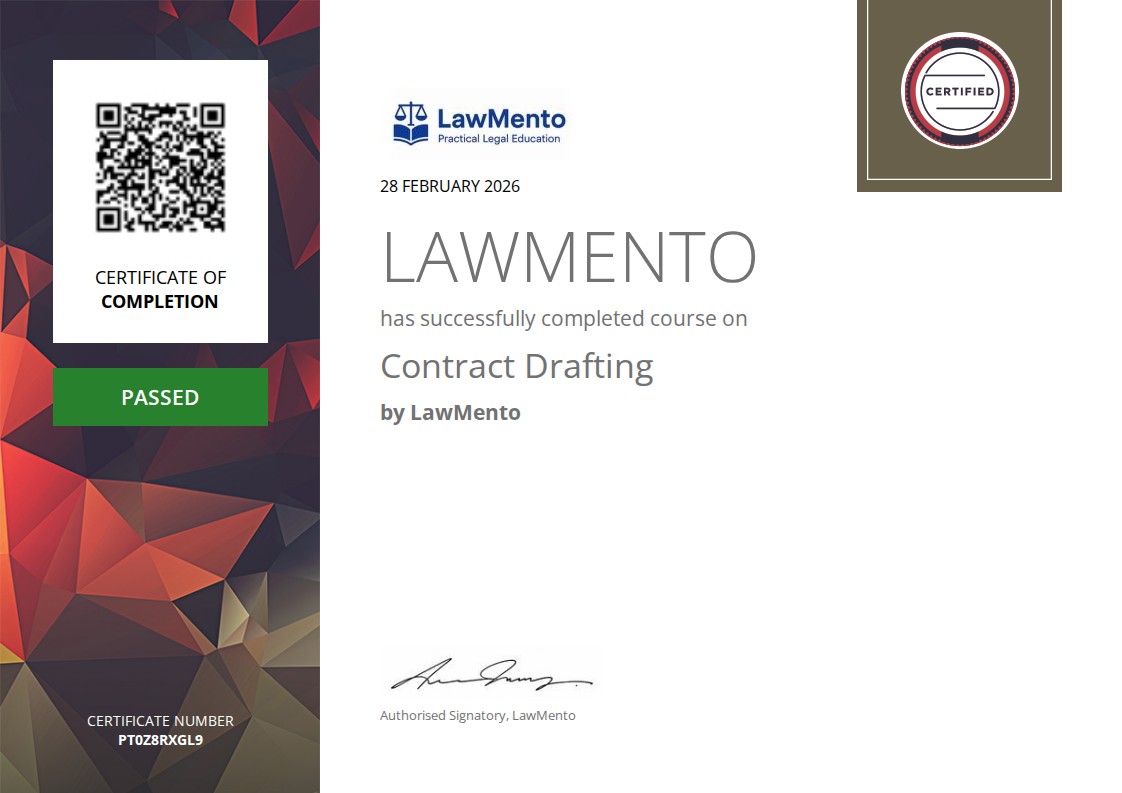
Add a Verifiable LawMento Certificate to Your Profile
Each LawMento certificate includes the learner’s name, course title, completion date, authorised signature, unique certificate number and QR code. It can be added to a CV, LinkedIn profile or professional portfolio.
Questions About the Trial Advocacy Course
What is included in the trial advocacy course?
The course includes 3+ hours of structured learning, 11 modules, 7+ practical e-books, one-year access and a certificate of completion.
Is the course suitable for law students?
Yes. It is designed for undergraduate and postgraduate law students, especially those interested in litigation and trial advocacy competitions.
Does the course cover cross-examination?
Yes. The curriculum covers cross-examination techniques and drafting of cross-examination question sets.
Does the course include practical drafting?
Yes. Learners are introduced to trial briefs, witness questions, opening and closing outlines and written submissions.
Can recent law graduates enrol?
Yes. The course is suitable for recent graduates and aspiring litigators who want practical courtroom preparation.
Does the course provide a certificate?
Yes. Learners receive a certificate of completion after satisfying the applicable course requirements.
When will course access be provided?
Access is provided immediately after successful payment. Learners should check the email address used during enrolment.
How long will I have access?
The course remains accessible for one year from enrolment.
Start Learning Trial Advocacy Skills
Join the online course and receive immediate access to the complete curriculum, resources and certificate pathway.