
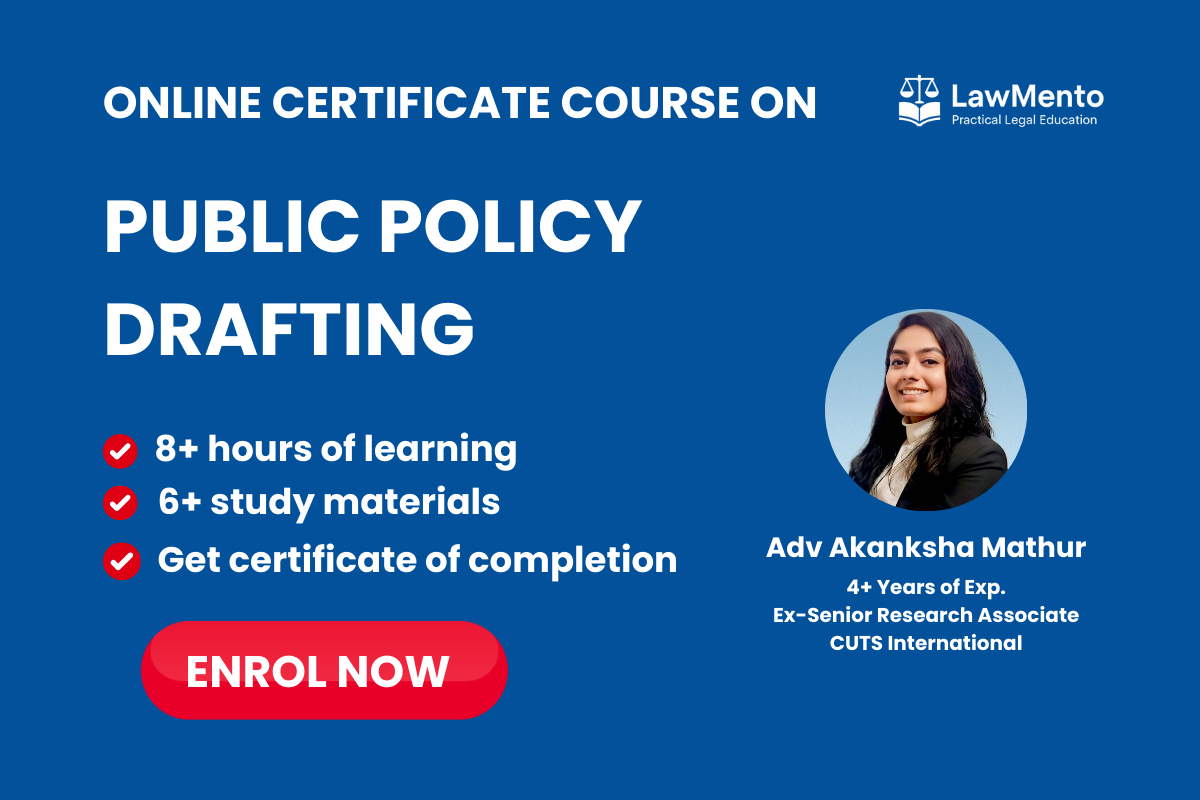
Online Public Policy and Drafting Course [+ Drafting]
Learn how to analyse public issues and draft policy briefs and policy papers that influence real decisions through 8+ hours of structured learning, practical drafting training, 6+ reading resources and a certificate of completion.
About the Online Certificate Course on Public Policy and Drafting
Public policy drafting is an essential skill for professionals working with governments, think tanks, NGOs, international organisations, research institutions and advocacy groups.
Well-structured policy documents can influence legislation, governance priorities, institutional reforms and the allocation of public resources. Effective policy writing requires more than subject knowledge; it requires clarity, evidence, strategic thinking and an understanding of the intended decision-maker.
This course provides step-by-step practical training in drafting policy briefs and policy papers. It explains how public issues are identified, framed, analysed and converted into persuasive documents supported by relevant context and recommendations.
By the end of the course, learners will understand how to independently draft structured, strategic and impact-oriented policy documents for professional and institutional use.
Key Policy Drafting Problems Covered
- Unclear identification and framing of policy problems
- Weak or unsupported policy recommendations
- Poor structure and logical flow in policy documents
- Failure to adapt writing for decision-makers
- Confusion between policy, academic and legal writing
- Insufficient use of evidence, data and references
Learn to Turn Public Issues Into Persuasive Policy Documents
Develop the research, analysis and drafting skills required to prepare policy briefs, papers and evidence-based recommendations.
Skills Learners Can Develop
The course focuses on practical policy communication, structured analysis and professional drafting.
Identify Policy Problems
Define public issues clearly by examining their legal, political, social and institutional context.
Conduct Policy Analysis
Evaluate competing considerations, affected stakeholders and possible policy alternatives.
Draft Policy Briefs
Prepare concise and persuasive briefs designed for government and institutional decision-makers.
Draft Policy Papers
Develop detailed policy papers with context, alternatives, recommendations and supporting references.
Write Recommendations
Create evidence-based, practical and outcome-oriented policy recommendations.
Structure Arguments
Build a logical flow from problem identification to analysis, alternatives and proposed action.
Edit Policy Documents
Improve clarity, formatting, readability, concision and overall professional presentation.
Understand Career Scope
Explore policy roles in research organisations, governments, NGOs and advocacy institutions.
Designed for Aspiring Policy Professionals
Law Students
Useful for undergraduate and postgraduate law students interested in governance, legislation and policy research.
Recent Law Graduates
Supports graduates preparing for policy, research, fellowship and institutional roles.
Lawyers and Advocates
Relevant for practitioners working on regulatory, legislative, governance and public-interest matters.
Public Policy Aspirants
Provides a practical introduction to policy analysis, communication and document drafting.
Researchers and NGO Professionals
Helpful for those preparing advocacy documents, recommendations and institutional policy papers.
Anyone Seeking Upskilling
Suitable for learners who want structured training in professional policy writing.
Build Practical Policy Research and Drafting Skills
Receive structured lessons, practical drafting guidance, reading resources and one-year course access.
Public Policy and Drafting Course Plan
The curriculum progresses from policy fundamentals and communication to policy briefs, policy papers, practical drafting and career guidance.
Module 1: Introduction to Public Policy and Policy Communication
- Meaning, purpose and scope of public policy
- How governments and institutions use policy documents
- Importance of policy communication
- Difference between policy, academic and legal writing
Module 2: Policy Contexts and Recommendations
- Understanding political, legal and social contexts
- Identifying and drafting evidence-based recommendations
- Linking recommendations to policy outcomes
- Common errors in weak policy recommendations
Module 3: Policy Advocacy and Drafting Policy Briefs
- Meaning and use of policy advocacy
- Issue briefs and policy briefs
- Structure of a policy brief
- Steps for drafting a clear and persuasive brief
Module 4: Understanding Policy Papers
- Meaning and purpose of a policy paper
- Scope and intended audience
- Requirements, characteristics and essential elements
- Policy papers compared with academic and legal writing
Module 5: Structure and Components of a Policy Paper – Practical Training
- Drafting the executive summary
- Setting the context and scope
- Developing policy alternatives
- Drafting recommendations
- Using appendices, data and references
Module 6: Process of Writing a Policy Paper – Practical Training
- Selecting and defining a policy topic
- Creating an outline and logical flow
- Writing effective introductions and conclusions
- Formatting, clarity and readability
- Revision, editing and final drafting
Module 7: Lessons From Policy Experts and Career Guidance
- Real-world policy drafting experiences
- How governments and institutions use policy documents
- Common drafting mistakes in policy practice
- Career guidance for building a policy career
Where Public Policy Drafting Skills Are Used
Government Departments
Policy notes, recommendations, consultation documents and implementation proposals.
Think Tanks
Policy briefs, research papers, institutional reports and reform recommendations.
NGOs and Advocacy Groups
Issue briefs, campaign documents, stakeholder submissions and policy proposals.
International Organisations
Research-backed reports, programme recommendations and governance documents.
Legislative Research
Background notes, legislative analysis and evidence-based reform suggestions.
Public Affairs
Stakeholder communication, regulatory analysis and strategic policy engagement.
Academic Research
Converting research findings into accessible and decision-oriented policy outputs.
Corporate Policy Teams
Regulatory submissions, industry recommendations and institutional policy positions.
Meet the Mentor

Adv. Akanksha Mathur
Senior policy researcher and lawyer with over four years of experience in policy research and institutional analysis. She previously served as a Senior Research Associate at CUTS International and has published on judicial reforms and economic policy. Her practical experience in policy writing, research methodology and institutional evaluation supports the course’s applied approach.
Prepare Policy Documents With Greater Clarity and Confidence
Learn a practical process for researching, structuring, drafting and refining policy briefs and papers.
Add a Verifiable LawMento Certificate to Your Profile
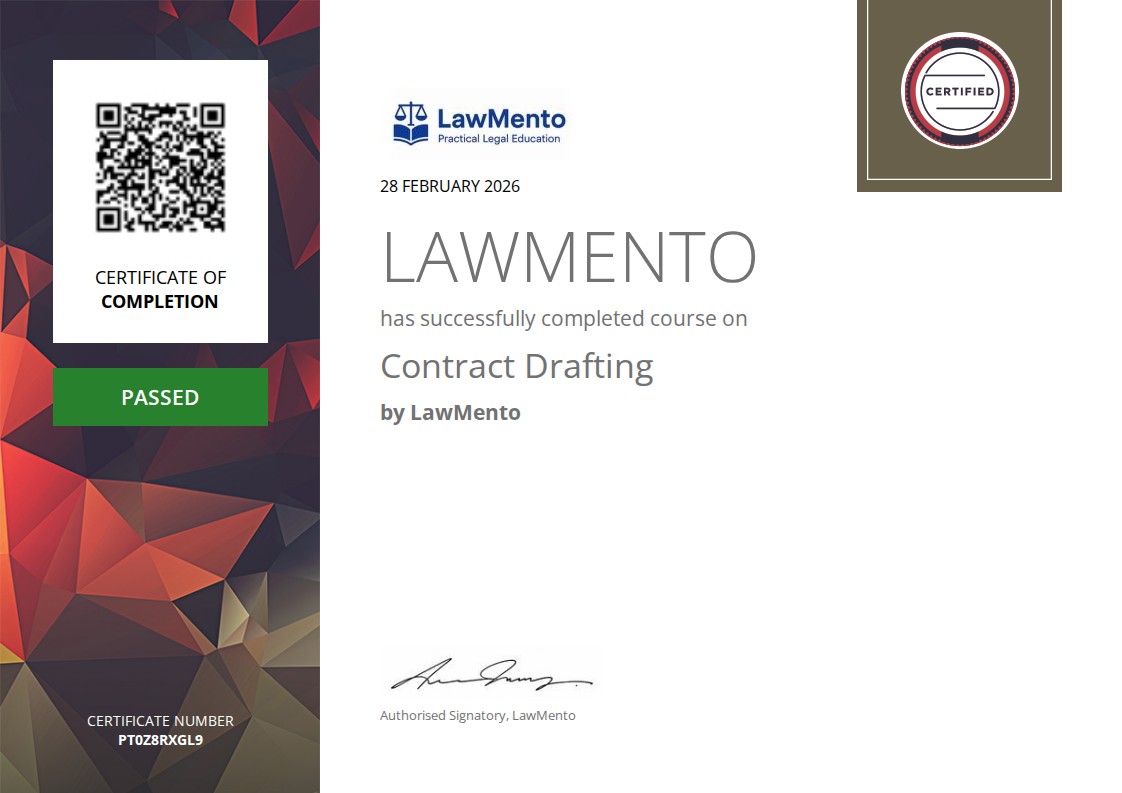
Each LawMento certificate includes the learner’s name, course title, completion date, authorised signature, unique certificate number and QR code. It can be added to a CV, LinkedIn profile or professional portfolio as evidence of continued skill development.
Questions About the Public Policy and Drafting Course
What is included in the online public policy and drafting course?
The course includes 8+ hours of structured learning, seven modules, 6+ reading resources, practical policy drafting training, one-year access and a certificate of completion.
Is this course suitable for law students?
Yes. It is suitable for undergraduate and postgraduate law students interested in governance, legislation, policy research, public law and institutional work.
Does the course include practical drafting?
Yes. The curriculum provides practical guidance on drafting policy briefs, policy papers, executive summaries, policy alternatives and recommendations.
What kinds of policy documents are covered?
The course focuses primarily on policy briefs and policy papers while also explaining issue briefs, recommendations and supporting policy communication.
Who can benefit from this course?
Law students, graduates, lawyers, policy aspirants, researchers, NGO professionals and others seeking structured policy-writing skills can benefit from the course.
Does the course provide a certificate?
Yes. Learners receive a certificate of completion after satisfying the applicable course completion requirements.
When will course access be provided?
Access is provided immediately after successful payment. Learners should check the email address used during enrolment.
How long will I have access?
The course remains accessible for one year from enrolment.
Start Learning Public Policy and Drafting
Join the online certificate course and receive immediate access to the complete curriculum, resources and certificate pathway.