

Online Course on Comparing Old and New Criminal Laws
Understand the transition from the IPC, CrPC and Indian Evidence Act to the BNS, BNSS and BSA through 6+ hours of structured learning, comparison-focused lessons, 6+ reading resources and a certificate of completion.
About the Online Certificate Course on Comparing Old and New Criminal Laws
India’s criminal justice framework has undergone one of its most significant reforms with the introduction of the Bharatiya Nyaya Sanhita, Bharatiya Nagarik Suraksha Sanhita and Bharatiya Sakshya Adhiniyam.
This course provides a structured comparison between the old and new criminal laws, explaining conceptual shifts, procedural changes and practical implications.
Learners understand how the Indian Penal Code differs from the Bharatiya Nyaya Sanhita, how the Code of Criminal Procedure has transitioned into the Bharatiya Nagarik Suraksha Sanhita and how the Indian Evidence Act has been replaced by the Bharatiya Sakshya Adhiniyam.
By the end of the course, participants will have a clearer understanding of how these reforms affect litigation practice, judicial processes and legal interpretation.
Key Changes This Course Examines
- Transition from IPC to BNS
- Transition from CrPC to BNSS
- Transition from the Evidence Act to BSA
- Changes in offences, terminology and punishments
- Procedural reforms affecting investigation and trial
- Practical implications for criminal litigation
Understand the New Criminal Laws Through Direct Comparison
Study the old and new provisions together and develop a clear understanding of the reforms introduced across substantive, procedural and evidentiary law.
What Learners Can Understand
The course develops a structured and comparison-based understanding of India’s reformed criminal law framework.
Understand the Reform
Learn why the old criminal laws were replaced and how the new framework is organised.
Compare IPC and BNS
Identify important changes in offences, terminology, punishments and statutory structure.
Compare CrPC and BNSS
Understand procedural changes concerning investigation, arrest, trial and criminal courts.
Compare Evidence Act and BSA
Study the transition in evidentiary rules, including the treatment of electronic evidence.
Recognise Key Shifts
Distinguish changes in legal concepts, section references and legislative language.
Use Comparison Tables
Revise major changes through summary tables covering all three new criminal laws.
Apply the New Framework
Connect the reforms with criminal litigation, judicial interpretation and legal practice.
Update Legal Knowledge
Build familiarity with the laws now governing criminal offences, procedure and evidence.
Designed for Law Students and Legal Professionals
Law Students
Useful for undergraduate and postgraduate law students studying criminal law and procedure.
Recent Law Graduates
Helps graduates update their knowledge before examinations, internships and legal practice.
Lawyers and Advocates
Relevant for practitioners who need a structured overview of changes affecting criminal litigation.
Corporate Legal Professionals
Helpful for legal teams handling compliance, investigations and criminal-law-related matters.
Competitive Examination Aspirants
Supports learners who need clarity on the transition from the old statutes to the new laws.
Anyone Seeking Upskilling
Suitable for anyone interested in understanding India’s reformed criminal justice framework.
Update Your Understanding of Indian Criminal Law
Receive structured lessons, comparative explanations, reading resources and one-year access.
Comparing Old and New Criminal Laws Course Plan
The curriculum introduces the reforms and then compares each old criminal law with its corresponding new legislation.
Module 1: Introduction to Criminal Law Reform in India
- Background to the criminal law reforms
- Overview of the three new criminal laws
- Transition from colonial-era statutes
- Structure and broad objectives of the new framework
Module 2: Bharatiya Nyaya Sanhita vs Indian Penal Code
- Structure of the BNS and IPC
- Important changes in offences and terminology
- Changes in punishments and criminal liability
- Comparison of major substantive provisions
Module 3: Bharatiya Nagarik Suraksha Sanhita vs CrPC
- Changes in criminal procedure
- Investigation, arrest and trial-related reforms
- Use of technology and procedural timelines
- Comparison of important BNSS and CrPC provisions
Module 4: Bharatiya Sakshya Adhiniyam vs Indian Evidence Act
- Structure and scope of the BSA
- Changes in evidentiary terminology and rules
- Electronic and digital evidence
- Comparison of important BSA and Evidence Act provisions
Module 5: Conclusion
- Combined impact of the three new laws
- Practical implications for legal education and practice
- Important points for revision
- Future interpretation and implementation
Bonus: 3 Summary Tables on Old vs New Criminal Laws
- IPC vs BNS summary table
- CrPC vs BNSS summary table
- Indian Evidence Act vs BSA summary table
Where This Knowledge Is Useful
Criminal Litigation
Understanding the provisions now applied in criminal complaints, trials and appeals.
Legal Research
Comparing old precedents and statutory references with the new legal framework.
Judicial Examinations
Revising the transition between the old statutes and the new criminal laws.
Law School Study
Building clarity in criminal law, criminal procedure and the law of evidence.
Internships
Following case files and legal discussions involving old and new statutory references.
Legal Drafting
Using correct statutory terminology and provisions in criminal-law documents.
Compliance and Investigations
Understanding procedural and evidentiary changes relevant to internal legal work.
Professional Upskilling
Keeping legal knowledge aligned with India’s current criminal justice framework.
Meet the Mentor

Ms. Nivedita Kaundinya
Assistant Professor of Law and Ph.D. Scholar. She is UGC-NET (Law) 2023 qualified and a Gold Medallist in LL.M. (Criminal and Security Laws) from Rashtriya Raksha University, Gandhinagar. She specialises in criminal law and legal research.
Build Clarity on India’s New Criminal Laws
Learn the major differences across substantive law, criminal procedure and evidence.
Add a Verifiable LawMento Certificate to Your Profile
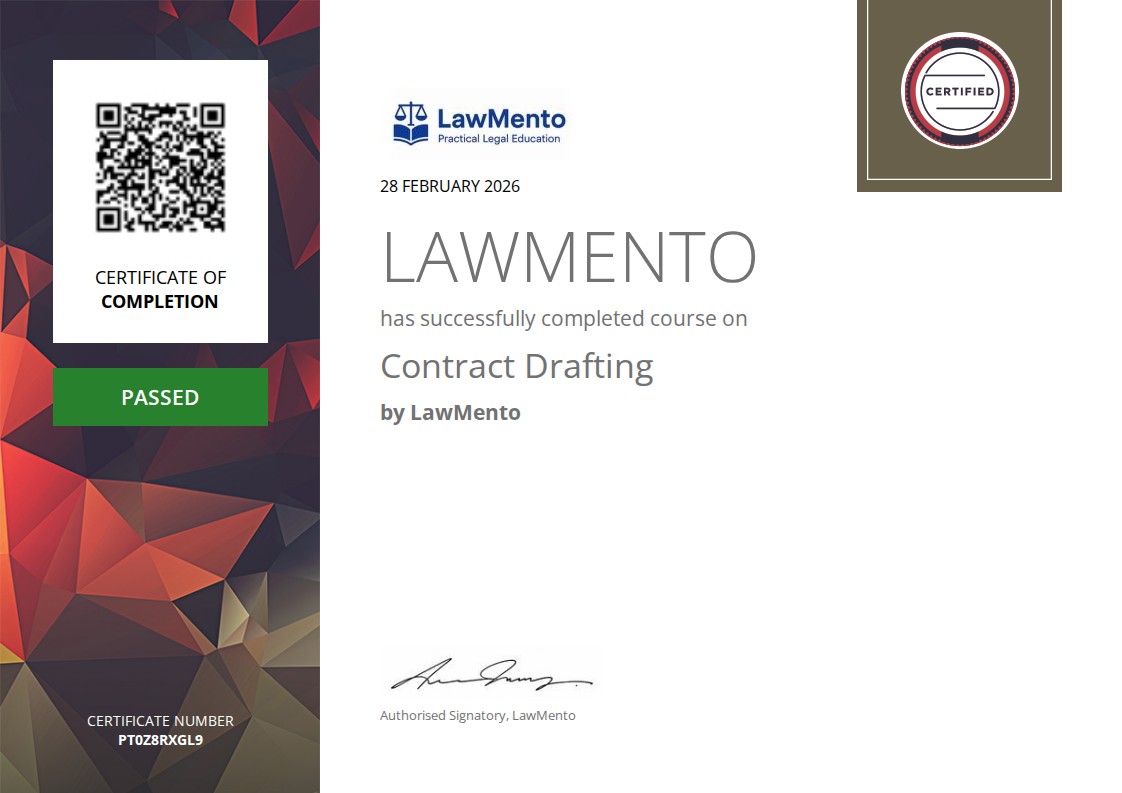
Each LawMento certificate includes the learner’s name, course title, completion date, authorised signature, unique certificate number and QR code. It can be added to a CV, LinkedIn profile or professional portfolio as evidence of continued skill development.
Questions About the Comparing Old and New Criminal Laws Course
What is included in this online criminal laws course?
The course includes 6+ hours of structured learning, five focused modules, 6+ reading resources, three summary tables, one-year access and a certificate of completion.
Which old and new criminal laws are compared?
The course compares the Indian Penal Code with the Bharatiya Nyaya Sanhita, the Code of Criminal Procedure with the Bharatiya Nagarik Suraksha Sanhita and the Indian Evidence Act with the Bharatiya Sakshya Adhiniyam.
Is this course suitable for law students?
Yes. It is suitable for undergraduate and postgraduate law students who want a structured understanding of India’s new criminal law framework.
Can practising lawyers enrol?
Yes. Lawyers and advocates can use the course to update their understanding of provisions affecting criminal litigation and legal practice.
Does the course include comparison tables?
Yes. The course includes three summary tables comparing IPC with BNS, CrPC with BNSS and the Indian Evidence Act with BSA.
Does the course provide a certificate?
Yes. Learners receive a certificate of completion after satisfying the applicable completion requirements.
When will course access be provided?
Access is provided immediately after successful payment. Learners should check the email address used during enrolment.
How long will I have access?
The course remains accessible for one year from enrolment.
Start Learning the New Criminal Laws
Join the online certificate course and receive immediate access to the complete curriculum, resources and certificate pathway.