
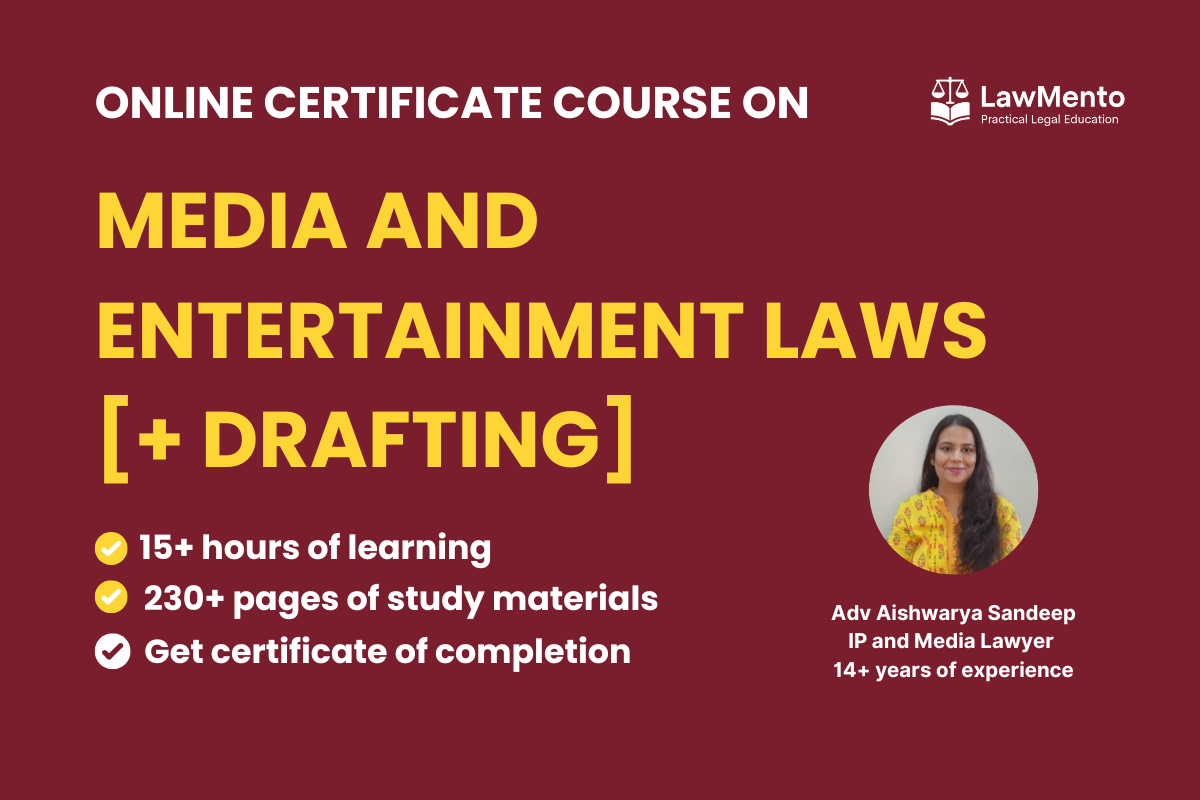
Online Media and Entertainment Law Course
Build practical knowledge of films, music, OTT platforms, advertising, digital media, privacy, intellectual property and entertainment contracts through structured lessons, reading resources and drafting-focused training.
About the Certificate Course in Media and Entertainment Law
The media and entertainment industry now extends far beyond cinema and television. It includes OTT platforms, music labels, production houses, digital creators, advertising agencies, social media companies, broadcasters, gaming businesses and online content platforms. Each segment creates legal questions involving copyright, contracts, privacy, defamation, censorship, licensing, data protection and regulatory compliance.
This online media and entertainment law course explains how legal principles operate across films, television, music, radio, OTT services, social media and advertising. It connects the regulatory framework with the commercial realities faced by lawyers, creators, producers, platforms and businesses.
The media and entertainment law course is designed to provide both conceptual clarity and practical exposure. Learners study industry regulations, copyright ownership, licensing structures, privacy concerns, personality rights, advertising standards and disputes commonly arising in the sector.
Unlike a purely theoretical programme, this media and entertainment law certificate course also introduces agreement drafting. Learners are guided through artist, producer, music, cinematographer, influencer and other entertainment agreements, along with the use of AI in legal drafting.
By completing this certificate course in media and entertainment law, learners can evaluate whether the field aligns with their career goals and develop a more confident approach to legal research, contract review, compliance and dispute analysis in the industry.
Legal Areas Covered in the Course
- Copyright and intellectual property in films and music
- OTT, broadcasting and digital media regulation
- Privacy, data protection and personality rights
- Advertising and influencer compliance
- Entertainment contracts and drafting
- Defamation, obscenity, piracy and industry disputes
Build Legal Skills for Films, Music, OTT and Digital Media
Learn the laws, contracts and disputes that shape modern media and entertainment practice.
Skills Learners Can Develop
The online course on media and entertainment law builds a practical framework for understanding regulations, analysing legal risks and working with industry agreements.
Understand Industry Laws
Study the legal framework governing films, music, television, radio, OTT platforms, digital media and advertising.
Analyse Copyright Issues
Understand ownership, assignment, licensing, infringement and protection of creative works across media formats.
Draft Agreements
Learn the structure and purpose of artist, producer, music, cinematographer, influencer and related agreements.
Review Legal Risks
Identify unclear rights, weak obligations, missing protections and commercial risks in entertainment contracts.
Handle Digital Compliance
Understand privacy, data protection, platform regulation and online content concerns affecting digital businesses.
Assess Advertising Rules
Study misleading advertisements, influencer disclosures, brand promotions and applicable compliance standards.
Understand Disputes
Examine piracy, defamation, obscenity, censorship, copyright infringement and television industry conflicts.
Explore Career Paths
Understand roles available in law firms, production houses, OTT companies, labels, agencies and legal teams.
Designed for Learners Interested in Media Law Practice
Law Students
The media and entertainment law course for law students supports internships, competitions, research, drafting exercises and career exploration.
Recent Law Graduates
Useful for graduates preparing for work with law firms, advocates, production houses, media companies and in-house teams.
Lawyers and Advocates
A practical media law course for lawyers who want to expand into copyright, contracts, compliance or entertainment disputes.
Corporate Legal Professionals
Relevant for professionals handling content, licensing, advertising, privacy, platform policy and commercial agreements.
Creators and Industry Professionals
Helpful for understanding ownership, licensing, contracts and regulatory obligations connected with creative work.
Anyone Seeking Upskilling
Suitable for learners who want a structured introduction to the legal side of the media and entertainment industry.
Move Beyond Theory With Industry-Focused Legal Learning
The media and entertainment law online course includes practical lessons, reading materials, drafting coverage and one-year access.
Media and Entertainment Law Course Plan
The curriculum progresses from industry foundations and regulatory frameworks to privacy, drafting, disputes and career opportunities.
Module 1: Introduction to Media, Entertainment and Law
- Meaning and scope of media and entertainment law
- Structure of the media and entertainment industry
- Role of lawyers in films, music, television, OTT and digital media
- Key legal and commercial relationships in the sector
Module 2: Key Areas in Media and Entertainment Law
- Music industry regulations
- Film industry legal framework
- OTT platform laws
- Social media and influencer laws
- Advertising compliance
- GDPR and data protection
- Broadcasting regulations
Module 3: Regulatory Framework in the Media Sector
- Film regulations and certification
- OTT regulations and platform obligations
- Copyright in films
- Copyright in music
- Radio and television regulations
- News industry regulations
Module 4: Data Protection and Privacy in Media
- Privacy concerns in content creation and publication
- Collection and use of personal data
- Consent, publicity and personality rights
- Digital platforms and data-protection responsibilities
Module 5: Drafting in Media and Entertainment Law
- Basics of legal drafting
- Artist agreements
- Investor agreements
- Music agreements
- Cinematographer agreements
- Child artist agreements
- Dialogue writer agreements
- Action director agreements
- Influencer agreements
- Producer agreements
- Using AI for drafting
Module 6: Other Legal Drafting in the Media Industry
- Identifying parties, rights and deliverables
- Payment, credit and ownership clauses
- Confidentiality, exclusivity and termination
- Adapting agreements to the commercial relationship
Module 7: Disputes in Media and Entertainment
- Copyright infringement and piracy
- Television industry disputes
- Defamation, blasphemy and sedition-related issues
- Obscenity-related disputes
- Misleading advertisements
Module 8: Career Opportunities in Media and Entertainment Law
- Law-firm and chamber practice
- In-house roles with production houses, OTT platforms and labels
- Legal work with agencies, broadcasters and digital companies
- Skills required to begin and grow in the field
Learn Through Regulations, Agreements and Real Industry Context
Build familiarity with the laws and documents used across films, music, OTT, advertising and digital media.
Agreements and Legal Documents Covered
Artist Agreements
Understand services, compensation, exclusivity, credits, intellectual property and termination clauses.
Producer Agreements
Study production responsibilities, rights, financing, approvals and distribution-related obligations.
Music Agreements
Explore ownership, licensing, royalties, performance rights and commercial use of musical works.
Investor Agreements
Learn how investment terms, recoupment, participation rights and risk allocation can be documented.
Cinematographer Agreements
Cover scope of work, payment, equipment, credit, timelines and ownership of recorded material.
Child Artist Agreements
Understand consent, guardianship, working conditions, payment and welfare-related protections.
Writer and Director Agreements
Study deliverables, revisions, creative control, credits, intellectual property and compensation.
Influencer Agreements
Address campaign obligations, disclosures, content approval, usage rights, payment and brand protection.
Understand How Law Shapes Creative and Commercial Decisions
Media Regulation and Compliance
The online certificate course in media and entertainment law explains how different forms of content are regulated. Learners examine the legal environment surrounding films, broadcasting, OTT platforms, digital creators, advertisements and news media.
Entertainment Contracts and Disputes
The practical component focuses on how rights and obligations are recorded in agreements and how disputes arise when ownership, payment, credit, licensing, privacy or content standards are unclear.
Where Media and Entertainment Law Skills Can Be Applied
A certificate course in media and entertainment law can support career exploration across advisory, drafting, compliance, intellectual property and dispute-resolution work. The learning is especially useful for professionals who want to understand how legal services operate inside creative and digital businesses.
Law Firms and Chambers
The online media and entertainment law course can help learners understand the issues handled by lawyers advising artists, producers, platforms, broadcasters and advertising businesses.
Production Houses and OTT Platforms
An online certificate course in media and entertainment law provides context for content acquisition, production contracts, platform compliance, licensing and dispute management.
Music Labels and Creator Businesses
The media and entertainment law certificate course introduces copyright ownership, royalties, licensing, artist relationships and the commercial use of creative works.
Advertising and Digital Agencies
The online course on media and entertainment law explains influencer agreements, brand-content rights, disclosures, privacy concerns and misleading advertisement risks.
The certificate course on media and entertainment law does not promise a particular job or career outcome. Instead, it provides structured exposure that can help learners identify relevant roles, prepare for internships and approach entry-level assignments with greater clarity. For lawyers already in practice, the media and entertainment law online course can serve as a focused upskilling resource for matters involving copyright, contracts, digital platforms and content-related disputes.
Meet the Mentor

Adv. Aishwarya Sandeep
Adv. Aishwarya Sandeep has over 14 years of experience in media and entertainment law. She has worked extensively on contracts, intellectual property matters and regulatory compliance across films, music and digital platforms, bringing strong industry insight into this course.
Learn From Practical Media and Entertainment Experience
Get structured guidance on legal frameworks, contracts, compliance and disputes with one-year course access.
Add a Verifiable LawMento Certificate to Your Profile
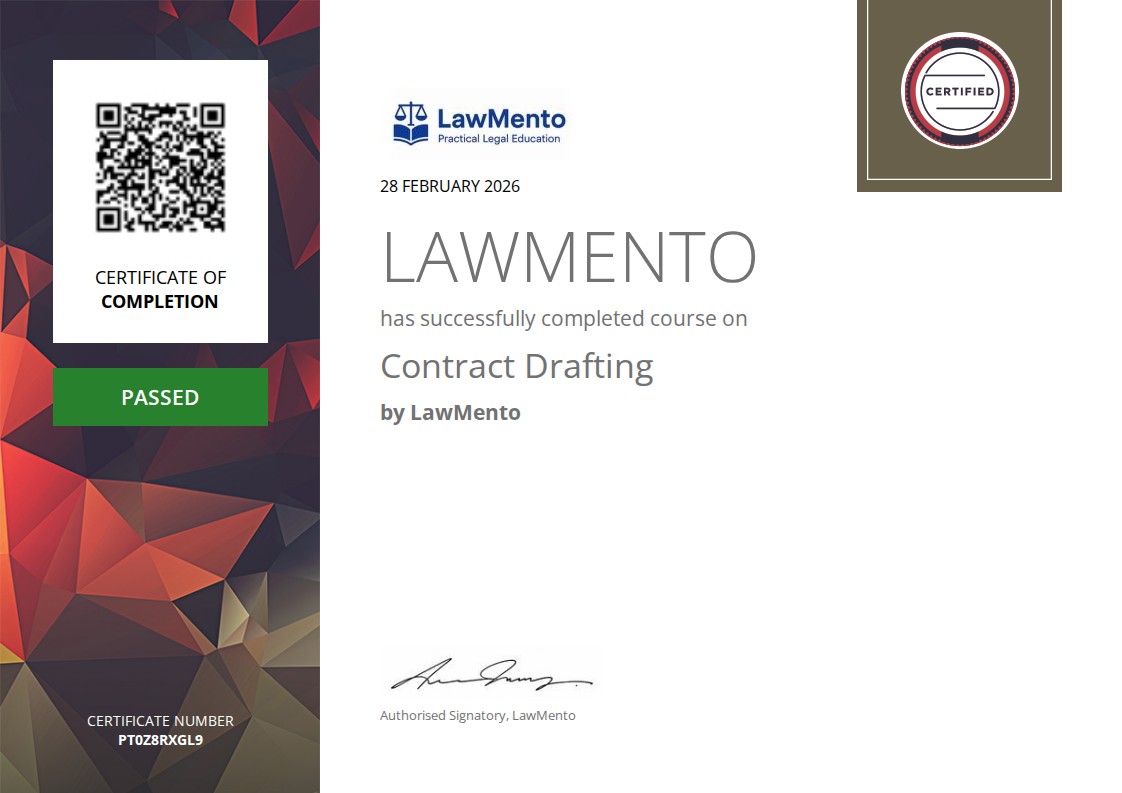
Each LawMento certificate includes the learner’s name, course title, completion date, authorised signature, unique certificate number and QR code. It can be added to a CV, LinkedIn profile or professional portfolio as evidence of continued skill development.
Questions About the Media and Entertainment Law Course
What is included in the media and entertainment law course?
The course includes 15+ hours of structured learning, 13+ reading resources, practical coverage of 12 drafts, one-year access and a certificate of completion.
Is this an online certificate course in media and entertainment law?
Yes. The programme is delivered online and includes a certificate of completion after the applicable course requirements are completed.
Is the course suitable for law students?
Yes. The course begins with industry and regulatory foundations before moving to contracts, disputes and career opportunities, making it suitable for law students and recent graduates.
Can practising lawyers enrol?
Yes. Lawyers and advocates can use the course to strengthen their understanding of copyright, entertainment agreements, digital compliance and media-related disputes.
Does the course cover film and television law?
Yes. The curriculum covers film regulations, copyright in films, television regulations, industry disputes and agreements commonly used in production-related work.
Does the course cover music and OTT laws?
Yes. It includes music industry regulations, copyright in music, OTT platform laws and regulatory issues affecting digital content services.
Will I learn entertainment contract drafting?
Yes. The certificate course on media and entertainment law covers the basics of drafting and introduces artist, investor, music, cinematographer, child artist, dialogue writer, action director, influencer and producer agreements.
Does the media law course cover privacy and data protection?
Yes. Learners study privacy, data protection, consent, personality rights and legal issues arising from the collection and use of personal information in media.
What career opportunities can the course support?
The learning is relevant to law firms, litigation chambers, production houses, music labels, OTT platforms, broadcasters, advertising agencies and in-house legal teams.
When will course access be provided?
Access is provided immediately after successful payment. Learners should check the email address used during enrolment for login and access details.
How long will I have access?
Learners receive access for one year, allowing lessons and resources to be revisited during that period.
What is the course fee?
The one-time fee for the media and entertainment law course is ₹1,099.
Start Learning Media and Entertainment Law Online
Join the certificate course in media and entertainment law and receive immediate access to the complete course, resources and certificate pathway.