
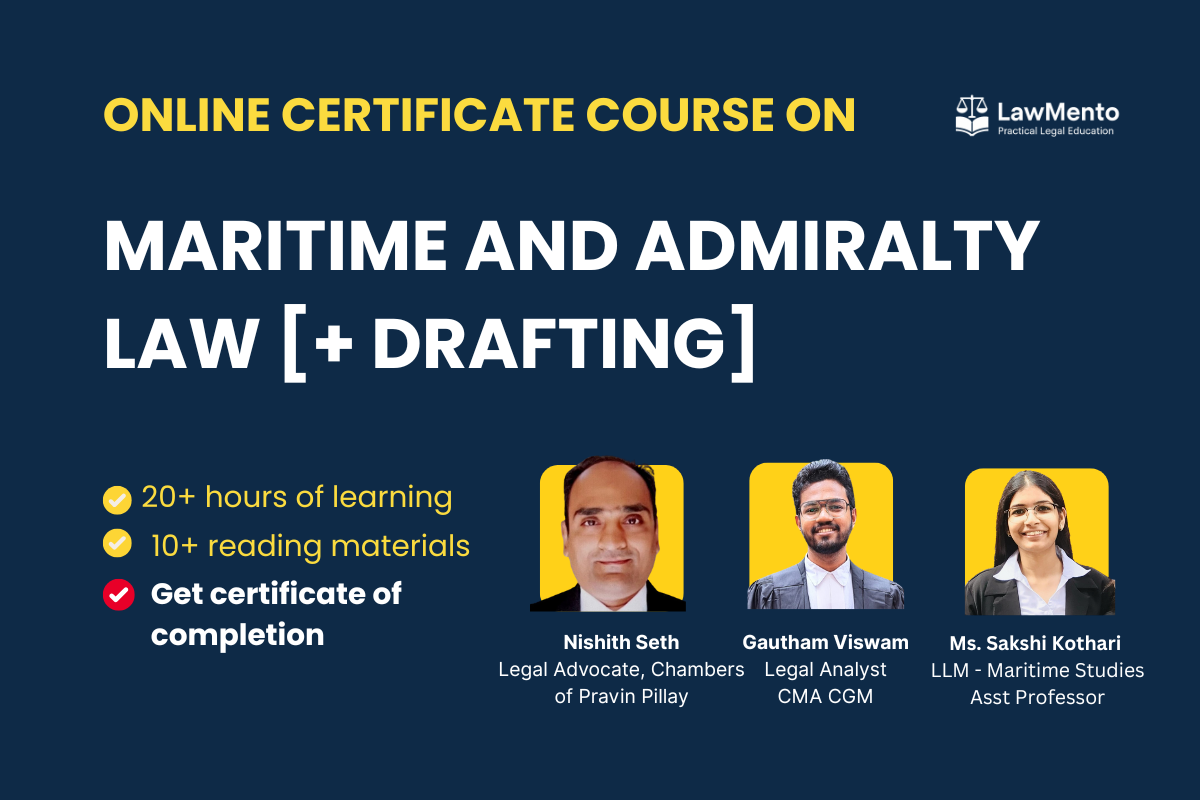
Online Certificate Course on Maritime Law [+ Admiralty Law and Drafting]
Build practical knowledge of maritime law, shipping law, admiralty jurisdiction and maritime drafting through 20+ hours of structured learning, 15 detailed modules, 10+ reading resources and a certificate of completion.
About the Online Certificate Course on Maritime Law
Maritime and admiralty law governs shipping, marine commerce, vessels, ports, marine insurance, carriage of goods by sea and disputes arising from activities at sea.
India’s expanding ports, shipping activity and international trade have created growing demand for lawyers who understand shipping documentation, maritime claims, vessel arrest proceedings and commercial dispute resolution.
This online maritime law course explains the legal framework governing merchant shipping, maritime zones, carriage of goods by sea, marine insurance, environmental obligations, admiralty jurisdiction and maritime litigation.
The course also develops practical drafting exposure across bills of lading, charter party agreements, freight contracts, ship arrest petitions, maritime arbitration submissions, regulatory applications and legal opinions.
Key Maritime Problems Covered
- Vessel arrest, release and maritime claims
- Charter party and freight disputes
- Loss or damage during carriage of goods by sea
- Marine insurance claims and documentation
- Port, registration and flag compliance
- Pollution, safety and environmental violations
Understand the Legal Framework Governing Shipping and Maritime Trade
Study maritime statutes, international conventions, admiralty remedies, shipping contracts and practical drafting used in maritime practice.
Skills Learners Can Develop
The course builds a practical understanding of maritime transactions, disputes, compliance and legal drafting.
Interpret Maritime Law
Understand Indian maritime statutes, admiralty principles and major international conventions.
Analyse Shipping Documents
Read bills of lading, charter parties, booking notes and contracts of affreightment.
Handle Maritime Claims
Identify maritime liens, vessel-related claims, cargo disputes and available legal remedies.
Understand Vessel Arrest
Learn the procedural framework governing ship arrest, security, release and enforcement.
Draft Commercial Contracts
Develop drafting exposure for charter parties, freight arrangements and shipping documentation.
Assess Marine Insurance
Understand policies, claims, indemnity issues and marine insurance documentation.
Apply Compliance Rules
Work with registration, flag, safety, port, pollution and maritime regulatory requirements.
Draft Dispute Documents
Learn the structure of petitions, submissions, enforcement applications and legal opinions.
Designed for Learners and Legal Professionals
Law Students
Useful for students interested in shipping law, commercial law, international trade and litigation.
Recent Law Graduates
Supports graduates preparing for roles in law firms, maritime chambers and shipping companies.
Lawyers and Advocates
Relevant for practitioners handling vessel arrests, cargo claims, contracts and maritime disputes.
Corporate Legal Professionals
Helpful for professionals working with shipping, logistics, ports, insurance and trade documentation.
Shipping and Maritime Professionals
Provides a structured legal understanding of transactions, compliance and dispute resolution.
Anyone Seeking Upskilling
Suitable for learners who want a practical introduction to maritime and admiralty law.
Learn Maritime Law Through Statutes, Contracts and Drafting
Receive 20+ hours of structured lessons, drafting exposure, 10+ reading resources and one-year access.
Maritime and Admiralty Law Course Plan
The curriculum covers maritime foundations, shipping regulation, commercial documentation, admiralty litigation, arbitration, compliance and practical drafting.
Module 1: Introduction to Maritime and Admiralty Law
- Foundations of maritime and admiralty law
- Maritime zones and transit regimes
- Contemporary challenges in maritime and admiralty law
Module 2: Legal Framework of Shipping and Ports
- Merchant shipping laws
- Nationality, registration and ownership of ships
- Maritime flags and state responsibility
- Access to ports, ship safety and security interests
- Indian legal framework
Module 3: Carriage of Goods by Sea and Marine Commerce
- Law of carriage of goods by sea
- Key shipping documents
- International conventions
- Marine insurance
- Maritime labour law and crew welfare
Module 4: Maritime Zones, Environmental Law and Fisheries
- Legal framework governing maritime zones
- Marine environmental protection
- Fisheries regulation and coastal obligations
Module 5: Maritime Litigation and Enforcement
- Scope of maritime litigation
- Arrest of vessels
- Maritime claims and liens
- Enforcement of judgments
- Marine insurance claims and commercial disputes
Module 6: Dispute Resolution and Admiralty Jurisdiction
- Origin and development of admiralty law
- Admiralty jurisdiction
- Maritime dispute settlement mechanisms
- Maritime arbitration
Module 7: Introduction to Commercial Shipping Contracts
- Structure and purpose of shipping contracts
- Allocation of risk and liability
- Common commercial terms
Module 8: Bill of Lading and Its Drafting
- Functions of a bill of lading
- Key clauses and legal effect
- Drafting considerations
Module 9: Charter Party Agreements
- Voyage charter parties
- Time charter parties
- Rights, obligations and dispute clauses
Module 10: Freight Contracts and Booking Notes
- Freight arrangements
- Booking notes
- Commercial and liability clauses
Module 11: Contracts of Affreightment
- Structure of contracts of affreightment
- Cargo commitments and performance obligations
- Drafting considerations
Module 12: Marine Insurance Documentation
- Marine insurance policies
- Claims documentation
- Coverage, exclusions and indemnity issues
Module 13: Admiralty and Dispute-Related Drafts
- Ship arrest petitions under Indian law
- Written submissions in maritime arbitration
- Security and bail bond drafts
- Enforcement applications for maritime awards
Module 14: Regulatory and Compliance Drafting
- Registration applications under merchant shipping law
- Notices under maritime-zone laws
- Flag declarations and safety-compliance forms
- Pollution reporting formats under MARPOL
Module 15: Research and Opinion Drafting
- Legal opinions on charter party disputes
- Port-control and environmental issues
- Dispute-resolution strategy and maritime compliance
Where Maritime Law Is Used
Shipping Companies
Vessel operations, documentation, chartering, freight and commercial compliance.
Ports and Terminals
Port access, cargo handling, safety obligations and regulatory matters.
Admiralty Litigation
Vessel arrest, maritime claims, liens, security and enforcement proceedings.
Marine Insurance
Policies, cargo or hull claims, coverage disputes and claims documentation.
International Trade
Carriage of goods by sea, bills of lading and cross-border commerce.
Maritime Arbitration
Charter party, freight, cargo and shipping-contract disputes.
Regulatory Compliance
Registration, flags, safety, environmental duties and pollution reporting.
Commercial Drafting
Charter parties, booking notes, affreightment contracts and legal opinions.
Meet the Mentors

Adv. Nishith Seth
Legal Advocate at the Chambers of Pravin Pillay with a Master’s degree in Maritime Studies. He practises in maritime and admiralty matters, including vessel arrest proceedings and shipping disputes under Indian law.

Adv. Gautham Viswam
Legal Analyst at CMA CGM with a Master’s degree in Maritime Studies. He works on commercial shipping documentation, marine compliance and maritime operational legal matters.

Adv. Sakshi Kothari
Assistant Professor with a Master’s degree in Maritime Studies. She specialises in maritime law, international conventions and admiralty jurisdiction, bringing academic clarity to shipping and regulatory frameworks.
Build Practical Knowledge for Maritime Legal Practice
Learn how shipping transactions are documented, regulated and enforced across maritime commerce and admiralty disputes.
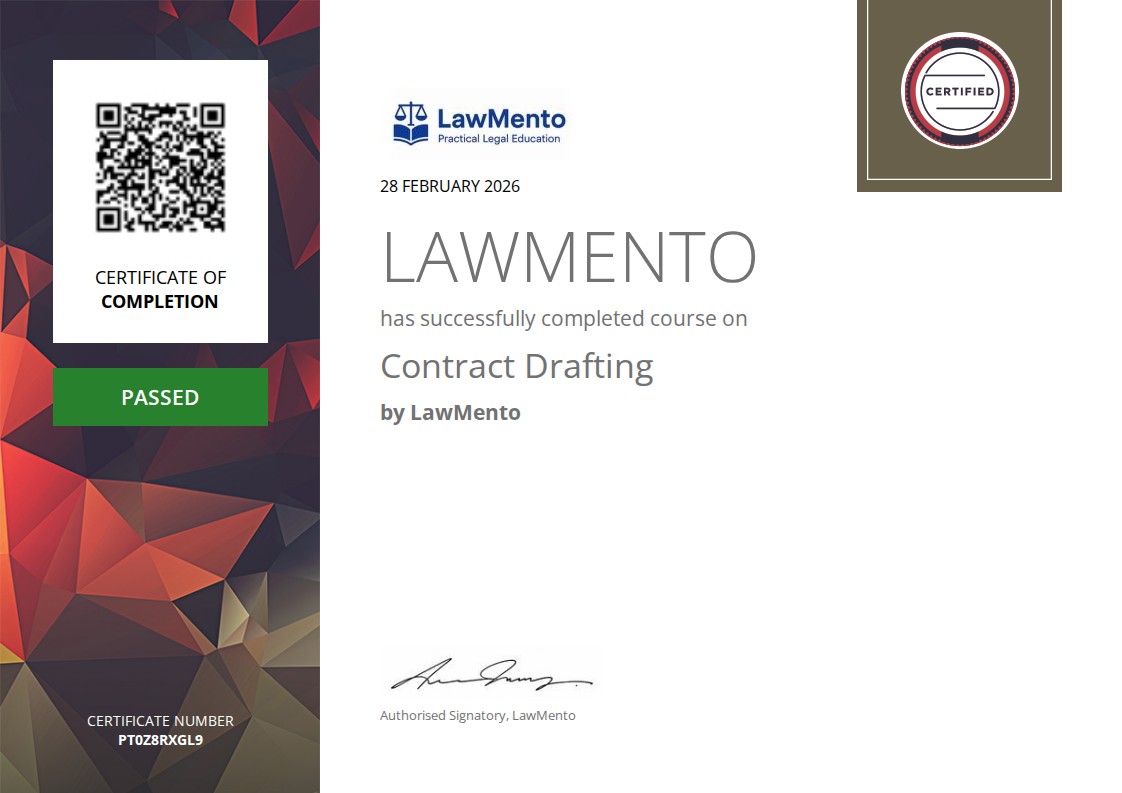
Add a Verifiable LawMento Certificate to Your Profile
Each LawMento certificate includes the learner’s name, course title, completion date, authorised signature, unique certificate number and QR code. It can be added to a CV, LinkedIn profile or professional portfolio as evidence of continued skill development.
Questions About the Maritime Law Course
What is included in the online certificate course on maritime law?
The course includes 20+ hours of structured learning, 15 detailed modules, 10+ reading resources, practical drafting exposure, one-year access and a certificate of completion.
Is this maritime law course suitable for law students?
Yes. It is designed for law students who want to understand shipping law, admiralty jurisdiction, maritime litigation, commercial contracts and drafting.
Can practising lawyers enrol in this online maritime law course?
Yes. Lawyers and advocates can use the course to strengthen their understanding of vessel arrest, maritime claims, shipping contracts, arbitration and regulatory compliance.
Does the course cover admiralty law and vessel arrest?
Yes. The curriculum covers admiralty jurisdiction, vessel arrest, maritime claims, liens, security, release and enforcement proceedings.
Does the course include practical drafting?
Yes. It covers bills of lading, charter parties, freight contracts, ship arrest petitions, arbitration submissions, compliance forms and legal opinions.
Does the maritime law course provide a certificate?
Yes. Learners receive a certificate of completion after satisfying the applicable completion requirements.
When will course access be provided?
Access is provided immediately after successful payment. Learners should check the email address used during enrolment.
How long will I have access?
The course remains accessible for one year from enrolment.
Start Learning Maritime and Admiralty Law
Join the online certificate course on maritime law and receive immediate access to the complete curriculum, drafting lessons, resources and certificate pathway.