
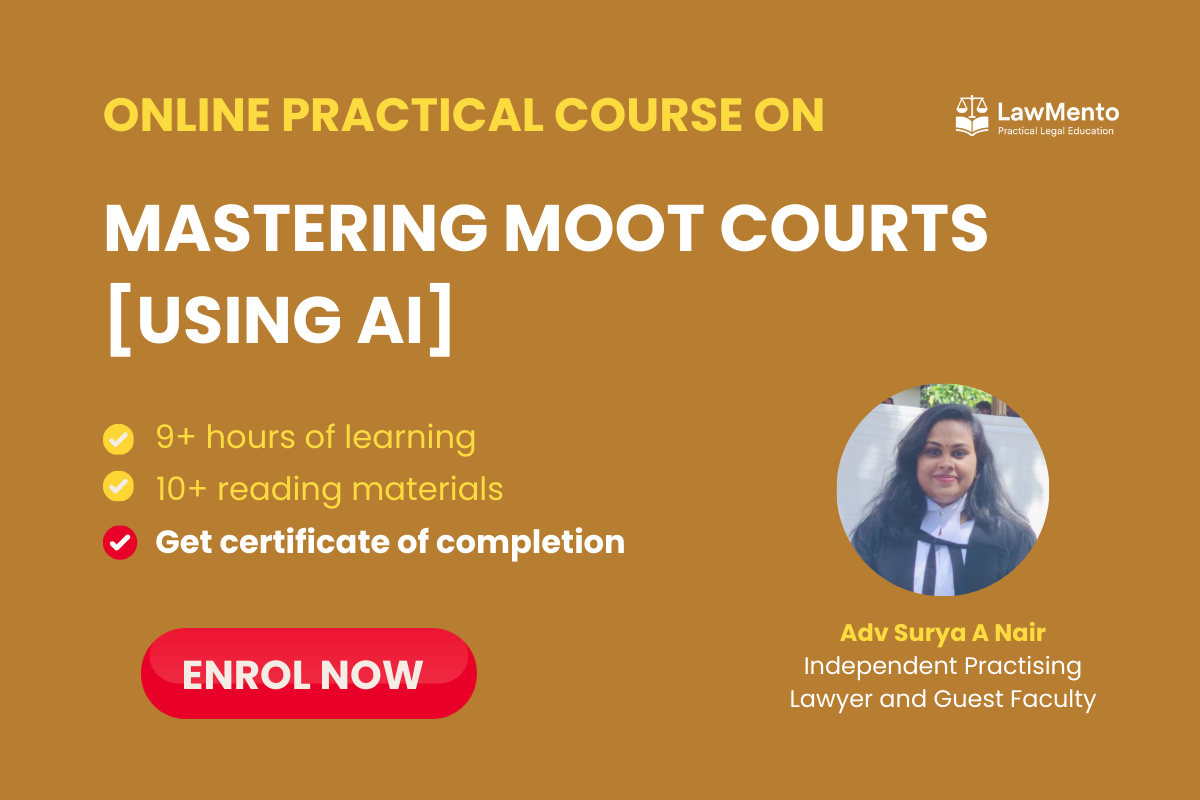
Online Moot Court Training [Practical Course]
Build practical mooting skills through 9+ hours of structured learning on moot proposition analysis, legal research, memorial drafting, oral advocacy, rebuttals and courtroom presentation.
About the Online Moot Court Training
Moot court competitions help law students develop legal research, drafting, advocacy and courtroom confidence. This online moot court course provides a structured path from reading a moot proposition to presenting persuasive oral arguments.
The course explains how to identify legal issues, organise research, analyse authorities and interpret statutes for a moot problem. Learners also study the process of preparing written memorials and legal briefs in a clear, competition-ready format.
Beyond drafting, the course focuses on oral advocacy, courtroom etiquette, handling questions from judges, rebuttals and public-speaking techniques. It also introduces responsible use of AI tools for research efficiency and argument structuring.
By completing this practical moot court course, learners can build a stronger foundation for internal, national and international moot court competitions.
Common Mooting Challenges Covered
- Difficulty analysing a complex moot proposition
- Unstructured or unfocused legal research
- Weak memorial organisation and drafting
- Lack of confidence during oral submissions
- Difficulty answering judges’ questions
- Ineffective rebuttals and time management
Prepare for Moot Court Competitions with Practical Training
Learn research, memorial drafting, legal argumentation and oral advocacy through a structured online mooting course.
Skills Learners Can Develop
The course is designed to strengthen the complete set of skills required for effective participation in moot court competitions.
Analyse Moot Problems
Break down facts, identify issues and understand the legal questions hidden within a moot proposition.
Conduct Focused Research
Find relevant statutes, precedents and authorities without losing direction or wasting time.
Read Case Laws
Extract legal principles, distinguish facts and use precedents effectively in written and oral submissions.
Interpret Statutes
Apply statutory provisions and interpretive principles to develop stronger legal arguments.
Draft Moot Memorials
Organise issues, arguments, authorities and prayers in a clear and persuasive memorial format.
Present Oral Arguments
Structure submissions, use court language and communicate confidently before a moot bench.
Handle Questions
Respond calmly and logically to interruptions, clarifications and challenging questions from judges.
Use Rebuttals Effectively
Identify weaknesses in opposing submissions and deliver concise, persuasive rebuttals.
Designed for Mooters and Aspiring Advocates
Law Students
Suitable for undergraduate and postgraduate law students preparing for their first or next moot court competition.
First-Time Mooters
Provides a step-by-step introduction to propositions, memorials, oral rounds and competition strategy.
Experienced Mooters
Helps refine research, drafting, rebuttal and advocacy techniques for more competitive performance.
Recent Law Graduates
Useful for graduates seeking to strengthen litigation, research and courtroom communication skills.
Lawyers and Advocates
Relevant for early-career practitioners who want structured training in legal argumentation and advocacy.
Moot Court Teams
Can support team preparation by creating a common method for research, memorial writing and oral rounds.
Build Research, Drafting and Advocacy Skills Together
Receive 9+ hours of learning, 10+ resources, practical guidance and one-year course access.
Moot Court Course Plan
The curriculum follows the complete mooting process, from understanding a proposition to drafting memorials and presenting oral arguments.
Module 1: Introduction to Mooting
- Purpose and structure of moot court competitions
- Roles within a moot court team
- Written and oral rounds
- Basic competition preparation
Module 2: How to Read and Analyse a Moot Problem
- Reading the proposition strategically
- Separating facts from assumptions
- Identifying issues and sub-issues
- Preparing an initial issue map
Module 3: Legal Research Techniques for Mooting
- Planning research around issues
- Locating statutes, judgments and commentaries
- Organising authorities and research notes
- Using AI tools responsibly for research support
Module 4: Analysing Case Laws
- Finding the ratio and relevant observations
- Using favourable authorities
- Distinguishing adverse precedents
- Connecting cases to the moot facts
Module 5: Interpreting Statutes and Regulations
- Reading statutory provisions in context
- Applying interpretive principles
- Resolving ambiguity
- Building statutory arguments
Module 6: How to Draft a Moot Memorial
- Structure of a memorial
- Statement of jurisdiction and facts
- Issues, summary of arguments and detailed submissions
- Citations, authorities and prayer
Module 7: Oral Arguments and Courtroom Advocacy
- Structuring oral submissions
- Courtroom language and etiquette
- Using authorities during oral rounds
- Maintaining clarity and persuasion
Module 8: Preparing a Legal Brief
- Creating a speaking outline
- Condensing arguments for oral rounds
- Preparing authorities and backup notes
- Team coordination and division of issues
Module 9: Outperforming Others in Moot Court Competitions
- Competition strategy
- Practice planning
- Bench preparation
- Improving consistency across rounds
Module 10: Public Speaking and Presentation Skills
- Voice modulation and pace
- Confidence and body language
- Managing nervousness
- Presenting complex arguments clearly
Module 11: Rebuttals and Questions from Judges
- Listening to opposing submissions
- Preparing concise rebuttals
- Answering judicial questions directly
- Recovering from difficult interventions
Where Moot Court Skills Are Used
Moot Competitions
Preparation for internal, national and international moot court competitions.
Litigation Practice
Researching issues, preparing briefs and presenting structured arguments before courts.
Legal Research
Finding, evaluating and applying statutes, cases and secondary authorities.
Legal Drafting
Writing persuasive memorials, submissions, briefs and issue-based arguments.
Client Conferences
Explaining legal positions clearly and responding to difficult questions.
Law Firm Interviews
Demonstrating research, reasoning, communication and advocacy experience.
Public Speaking
Developing confidence, clarity, time control and persuasive presentation.
Teamwork
Coordinating research, drafting and oral strategy with fellow team members.
Meet the Mentor

Adv. Surya A Nair
Adv. Surya A Nair is an advocate with achievements in moot court competitions and recognition in international moot forums such as IMUN. He brings practical advocacy experience and structured guidance on research, memorial drafting and oral arguments.
Turn Mooting Theory into Competition-Ready Skills
Learn how to research, draft and argue with greater structure, confidence and clarity.
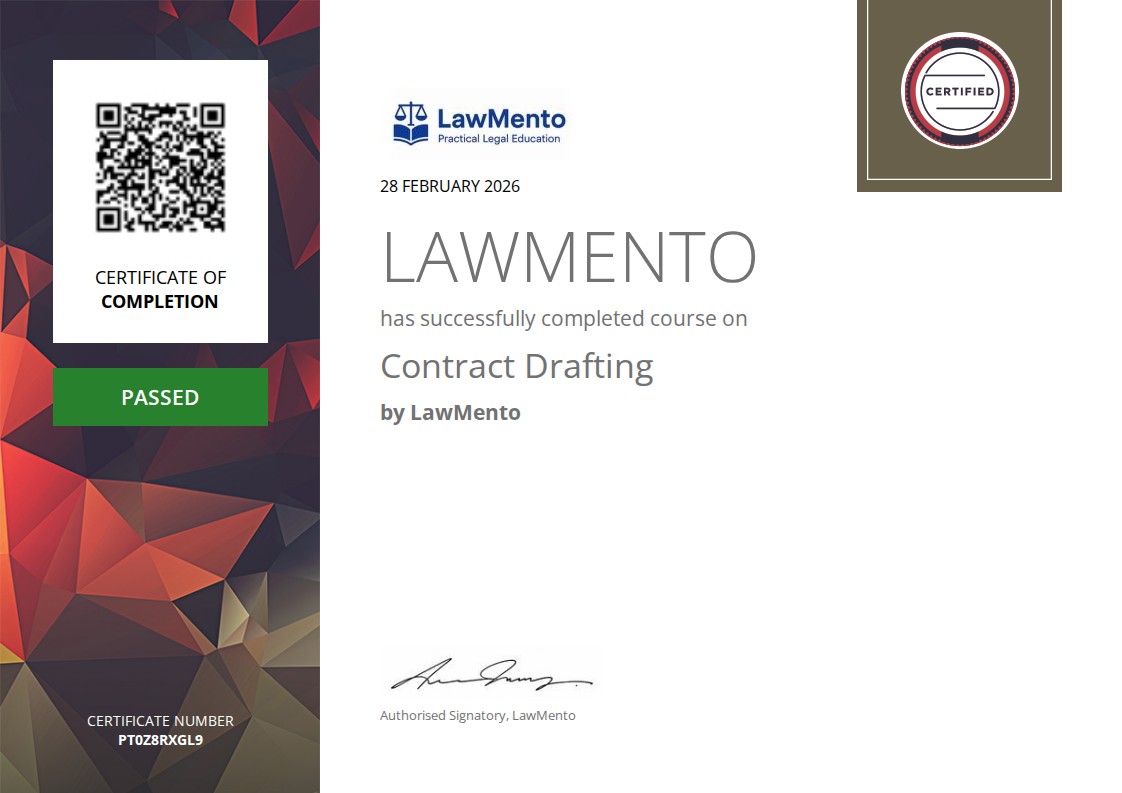
Add a Verifiable LawMento Certificate to Your Profile
Each LawMento certificate includes the learner’s name, course title, completion date, authorised signature, unique certificate number and QR code. It can be added to a CV, LinkedIn profile or professional portfolio as evidence of continued skill development.
Questions About the Moot Court Course
What is included in the online moot court training?
The course includes 9+ hours of structured learning, 11 modules, 10+ reading resources, one-year access and a certificate of completion.
Is this moot court course suitable for beginners?
Yes. The course starts with the fundamentals of mooting and gradually moves into legal research, memorial drafting, oral advocacy and rebuttals.
Does the course teach memorial drafting?
Yes. A dedicated module explains the structure and drafting of a moot memorial, including issues, arguments, authorities and prayers.
Does the course cover oral advocacy?
Yes. Learners study courtroom etiquette, oral submissions, public speaking, judicial questions and effective rebuttals.
Can experienced mooters join this course?
Yes. Experienced mooters can use it to refine their research, drafting, presentation and competition strategy.
Does the course provide a certificate?
Yes. Learners receive a certificate of completion after satisfying the applicable completion requirements.
When will course access be provided?
Access is provided immediately after successful payment. Learners should check the email address used during enrolment.
How long will I have access?
The course remains accessible for one year from enrolment.
Start Your Online Moot Court Training
Join the course and receive immediate access to the complete curriculum, resources and certificate pathway.