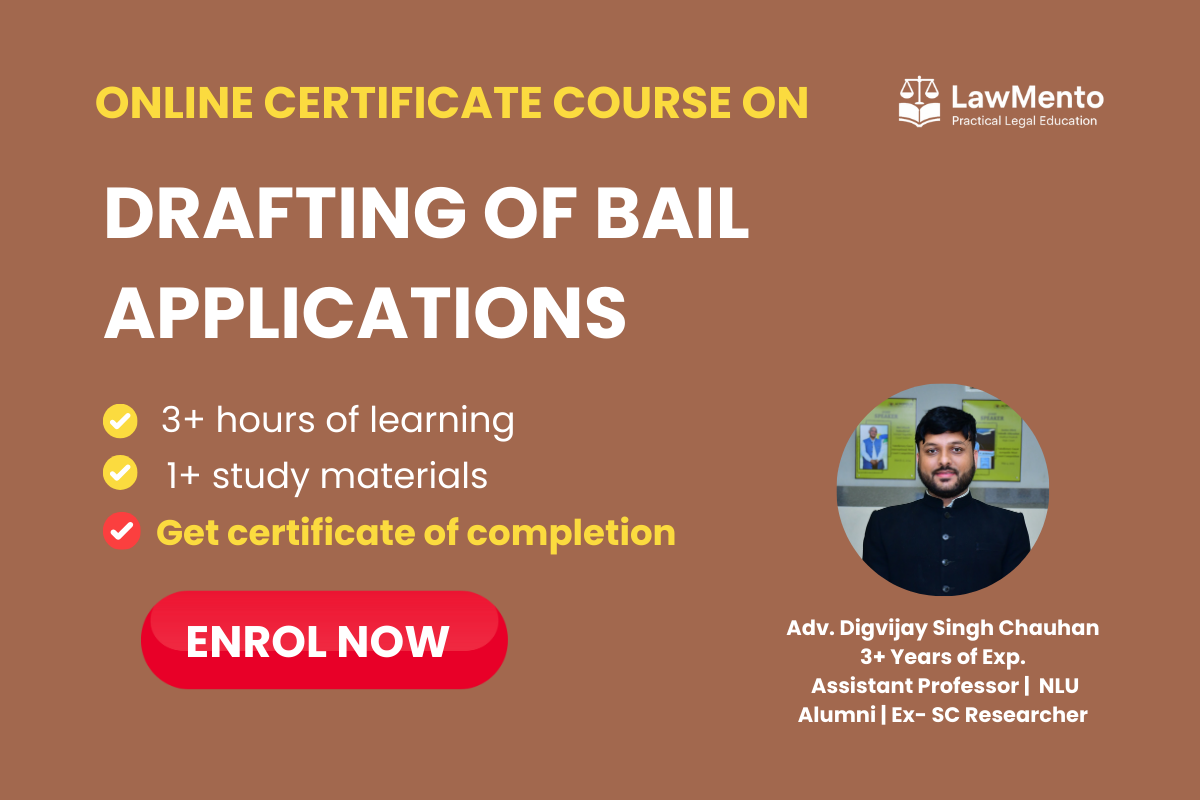
Regular Bail Applications
Study the purpose, structure and drafting of regular bail applications, including presentation of facts and relevant grounds.

Online certificate course
Learn the legal principles and practical drafting of regular bail applications, anticipatory bail applications and bail bonds. Understand how facts, legal grounds and procedural requirements are organised in criminal litigation, including matters involving rejection, cancellation and revocation of bail.
For law students, recent graduates, practising lawyers and learners interested in criminal litigation and court drafting.
See the 5-topic curriculumLearn from Adv. Digvijay Singh Chauhan, a practising advocate with experience before the Delhi High Court, Supreme Court of India, NCLT Delhi and NCLAT.
Develop an understanding of bail-related legal principles and the structure of court documents used in criminal proceedings.
Explore five focused topics covering the concept of bail, regular bail, anticipatory bail, bail bonds and the legal issues surrounding rejection, cancellation and revocation.
Learn how bail-related documents are organised, what information they commonly contain and how factual and legal grounds are presented in criminal proceedings.
Study the purpose, structure and drafting of regular bail applications, including presentation of facts and relevant grounds.
Understand the legal context and drafting elements of anticipatory bail applications, including apprehension of arrest and supporting grounds.
Examine the meaning, essential clauses, required particulars and practical format of bail bond documents.
Learn how to select and arrange relevant facts, identify procedural issues and present grounds clearly in bail applications.
Understand important legal considerations connected with rejection and cancellation of bail in criminal proceedings.
Study the legal context of bail revocation and related procedural considerations.
Assist with the preparation of regular bail applications and bail bonds in criminal matters before trial courts.
Understand the drafting approach involved in anticipatory bail and related proceedings before High Courts.
Support advocates with factual organisation, grounds for bail and preparation of court documents.
Explore how structured bail drafting fits into case preparation and criminal defence representation.
Become familiar with bail-related drafting work commonly assigned during internships with criminal litigators.
Build a foundation for preparing common bail-related legal documents with a more organised approach.
Learn to identify relevant facts, understand procedural circumstances and organise case material.
Connect foundational criminal procedure concepts with the structure of practical court drafts.

Practising Advocate
Adv. Digvijay Singh Chauhan has three years of experience practising before the Hon’ble High Court of Delhi, the Hon’ble Supreme Court of India, NCLT Delhi and NCLAT. He regularly handles litigation matters and brings practical insight into bail proceedings and courtroom strategy.
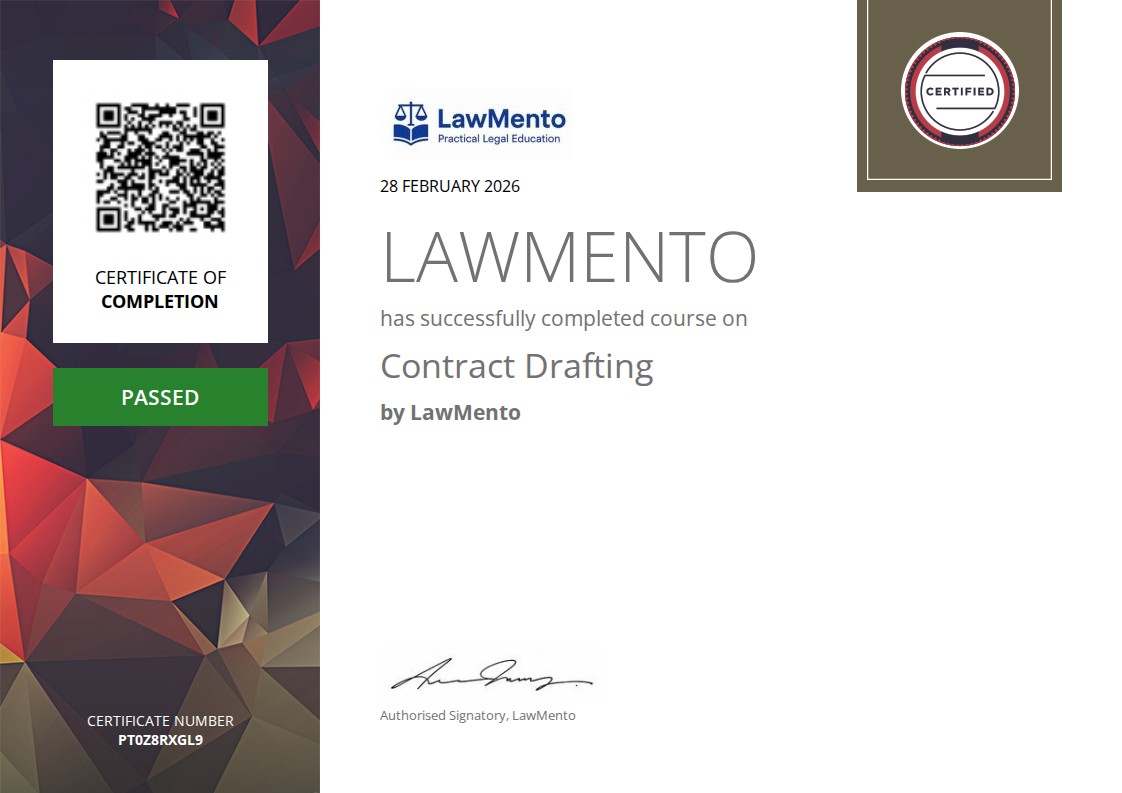
Your LawMento certificate includes your name, the course title, the completion date, an authorised signature, a unique certificate number and a QR code. Add it to your CV, LinkedIn profile or professional portfolio after completing the course.
The course includes 3+ hours of structured learning, five focused curriculum topics, 1+ reading resource, practical drafting guidance, one year of access and a certificate of completion.
Yes. The course is suitable for undergraduate and postgraduate law students who want practical exposure to criminal litigation and bail drafting.
Yes. Lawyers and advocates can use the course to review the structure of bail applications, bail bonds and related procedural considerations.
Yes. The curriculum covers the purpose, structure, legal grounds and drafting approach used for regular bail applications.
Yes. The course explains anticipatory bail, when it may be sought and how to organise an anticipatory bail application.
Yes. A dedicated topic covers the meaning, purpose, essential particulars and drafting format of bail bonds.
Yes. The introductory topic explains the concept of bail in bailable and non-bailable cases and the procedural context of bail.
Yes. The final topic addresses rejection, cancellation and revocation of bail and other important aspects of bail proceedings.
Yes. It introduces bail-related documents and drafting tasks commonly encountered during internships with criminal litigation chambers.
Yes. Learners receive a LawMento certificate of completion after satisfying the applicable course completion requirements.
Access begins immediately after successful payment. Check the email address used during enrolment for login and access details.
You can access the course lessons and reading resources for one year from enrolment.
The one-time course fee is ₹699.
₹699 · Immediate access for one year · Certificate on completion