
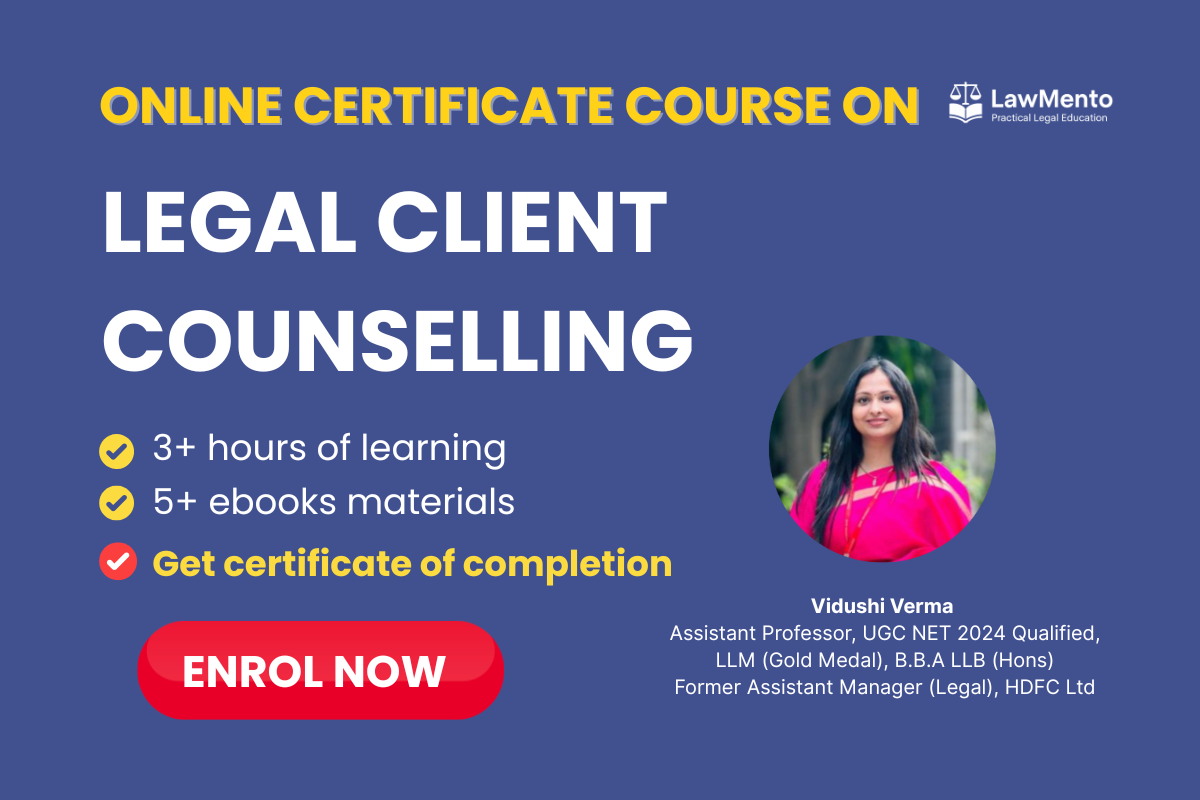
Online Course on Legal Client Counselling
Learn how to interact with clients, identify real legal issues and provide structured, practical advice. Build essential counselling, communication and problem-solving skills for legal practice and Client Counselling Competitions.
About the Online Course on Client Counselling
Client counselling goes beyond legal knowledge. It requires lawyers to understand a client’s concerns, identify underlying issues and communicate clear, practical solutions.
This course provides a structured approach to client counselling, covering both theoretical foundations and practical application. It explains how to analyse client problems, distinguish legal issues from emotional concerns and communicate advice effectively.
The course also prepares learners for Client Counselling Competitions by breaking down problem-solving techniques, interview strategies and the structured flow of a counselling session.
By the end of the course, learners can build greater confidence in handling client interactions, structuring counselling sessions and applying these skills in real legal practice.
Common Client Counselling Challenges Covered
- Identifying the client’s real legal problem
- Separating legal issues from emotional concerns
- Asking useful and structured questions
- Explaining legal options in practical language
- Maintaining ethics and professionalism
- Structuring a complete counselling session
Build Practical Client-Handling Skills
Learn how to listen, analyse, advise and structure client interactions with greater clarity and confidence.
Skills Learners Can Develop
The course focuses on the communication, analytical and advisory skills required during client counselling sessions.
Analyse Client Problems
Break down a client’s narrative and identify the facts, concerns and legal questions that require attention.
Identify Hidden Issues
Recognise emotional layers, unstated concerns and underlying issues that may affect the legal advice.
Use Interviewing Techniques
Apply structured questioning and listening techniques to gather useful information from clients.
Distinguish Legal Issues
Separate legally relevant questions from broader personal or emotional concerns.
Advise Clearly
Communicate legal options and practical next steps in a manner that clients can understand.
Structure Sessions
Understand the stages of a counselling session and organise the interaction professionally.
Apply Legal Ethics
Recognise professional responsibilities and ethical considerations during client interactions.
Prepare for Competitions
Use team coordination, role division and preparation strategies for Client Counselling Competitions.
Designed for Law Students and Legal Professionals
UG and PG Law Students
Suitable for students who want to strengthen practical communication and legal problem-solving skills.
Competition Participants
Useful for students preparing for Client Counselling Competitions and similar practical exercises.
Aspiring Litigators
Helps future litigators understand client interviews, issue identification and practical legal advice.
Aspiring Corporate Lawyers
Supports learners who may need to understand instructions, clarify concerns and advise business clients.
Recent Law Graduates
Useful for graduates seeking practical client-facing skills before entering professional legal roles.
Legal Skill Learners
Suitable for anyone interested in building practical client-handling, communication and advisory skills.
Learn Client Counselling Through Structured Practice
Receive focused lessons, practical strategies, ebooks and one-year course access.
Legal Client Counselling Course Plan
The curriculum progresses from the foundations of counselling to session strategy, competition preparation and career relevance.
Module 1: Foundations of Client Counselling
- Introduction to counselling and its principles
- Client counselling in law: key elements and responsibilities
- Understanding the Client Counselling Competition
- How to analyse counselling problems
- Identifying hidden issues and emotional layers
- Distinguishing legal issues from client concerns
Module 2: Skills, Strategy and Structuring the Session
- Stages of a client counselling session
- Interviewing techniques, including 11 practical techniques
- Skills required for effective counselling
- Identifying and analysing legal issues
- Advising clients clearly and practically
- Ethical considerations and professionalism
- Structuring a counselling session
Module 3: Preparation, Mistakes and Career Relevance
- Team coordination and role division
- Preparation strategies for competitions and practice
- Common mistakes and how to avoid them
- Practical tips and feedback techniques
- Importance of counselling skills in real legal careers
Where Client Counselling Skills Are Used
Litigation Practice
Understanding facts, client expectations and the legal issues involved before taking action.
Corporate Advisory
Clarifying instructions, identifying business concerns and communicating practical legal options.
Legal Aid
Listening to clients carefully and explaining legal remedies in an accessible manner.
Law Firm Interviews
Demonstrating communication, issue spotting, professionalism and practical legal thinking.
Client Competitions
Applying structured interviewing, team coordination and counselling-session techniques.
Chamber Practice
Receiving client instructions, gathering facts and assisting with preliminary legal strategy.
In-House Roles
Understanding internal stakeholder concerns and presenting clear legal recommendations.
Independent Practice
Building professional client relationships through clear communication and responsible advice.
Meet the Mentor

Adv. Vidushi Verma
Assistant Professor of Law and UGC NET 2024 qualified. She is an LLM Gold Medallist from NLU Odisha and has 4+ years of industry experience, including her role as Assistant Manager (Legal) at HDFC Limited.
Strengthen a Skill Every Lawyer Needs
Learn how to understand clients, identify legal issues and communicate practical advice.
Add a Verifiable LawMento Certificate to Your Profile
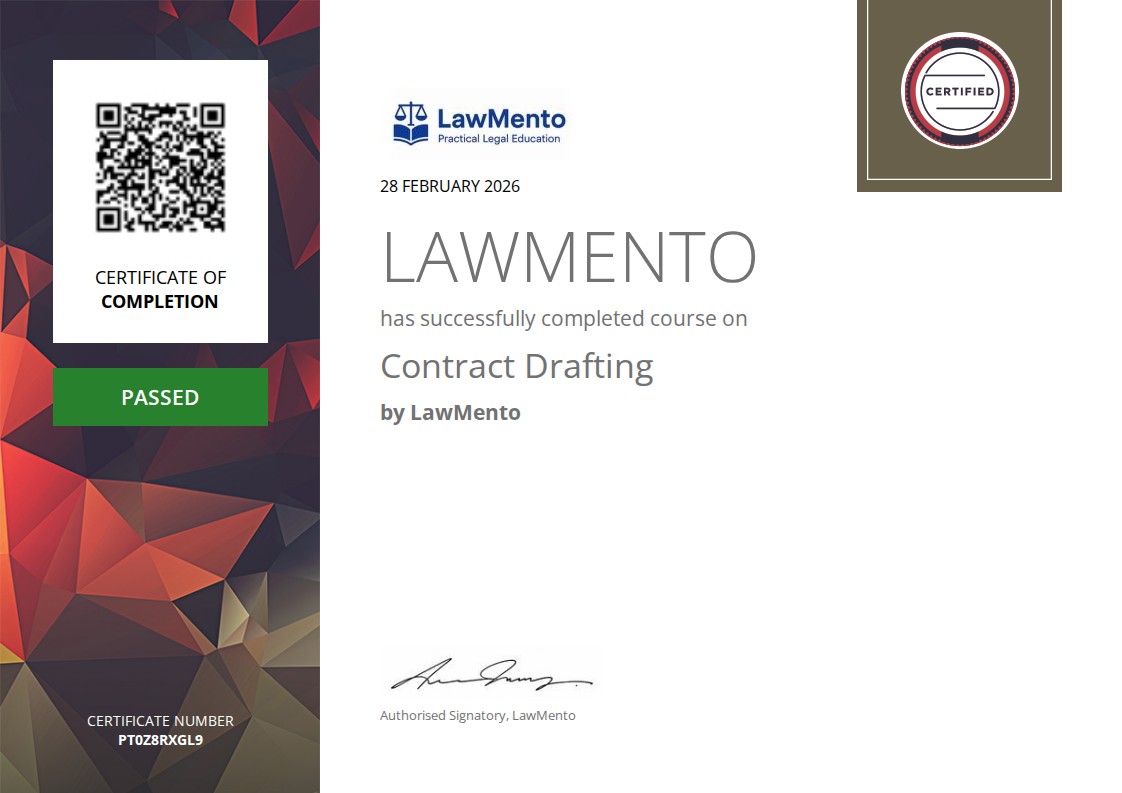
Each LawMento certificate includes the learner’s name, course title, completion date, authorised signature, unique certificate number and QR code. It can be added to a CV, LinkedIn profile or professional portfolio as evidence of continued skill development.
Questions About the Client Counselling Course
What is included in the legal client counselling course?
The course includes 3+ hours of structured learning, three focused modules, 5+ ebooks, one-year access and a certificate of completion.
Is this course suitable for law students?
Yes. It is suitable for undergraduate and postgraduate law students, recent graduates and learners preparing for Client Counselling Competitions.
Does the course help with Client Counselling Competitions?
Yes. It covers competition structure, problem analysis, interviewing techniques, team coordination, role division, preparation strategies and common mistakes.
Does the course cover practical interviewing techniques?
Yes. The curriculum includes 11 practical interviewing techniques along with guidance on session structure and issue identification.
Does the course provide a certificate?
Yes. Learners receive a certificate of completion after satisfying the applicable completion requirements.
When will course access be provided?
Access is provided immediately after successful payment. Learners should check the email address used during enrolment.
How long will I have access?
The course remains accessible for one year from enrolment.
What is the course fee?
The one-time course fee is ₹699.
Start Learning Legal Client Counselling
Join the online course and receive immediate access to the complete curriculum, ebooks and certificate pathway.