
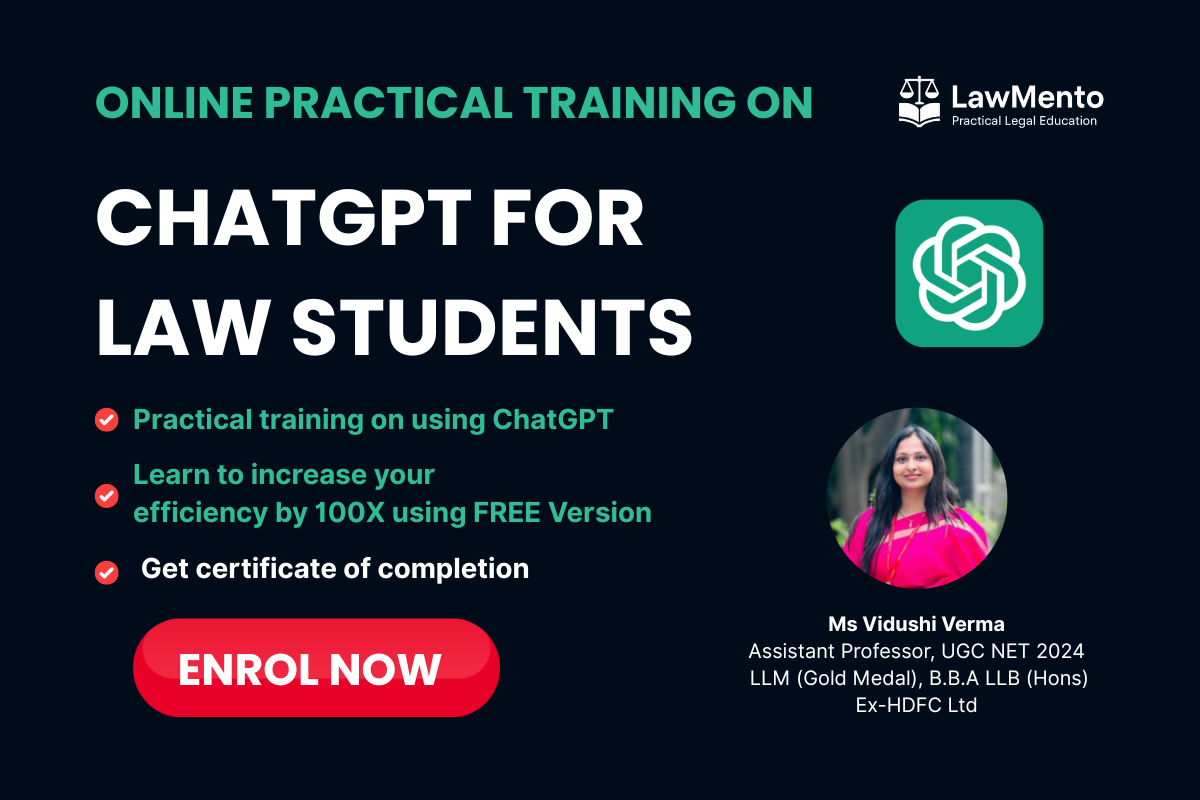
ChatGPT for Law Students [Practical Training]
Learn how to use the free version of ChatGPT for legal research, writing, mooting, exam preparation, CV building and internship applications through practical examples and structured guidance.
About the Online Certificate Course on ChatGPT for Law Students
Artificial intelligence is changing how law students research, write, revise and prepare for professional opportunities. This course explains how ChatGPT can be used responsibly to improve efficiency without replacing independent legal analysis.
The course provides step-by-step practical training on using ChatGPT for legal research, case analysis, legal writing, mooting, exam preparation, CV building and internship applications. The lessons are designed around the free version of ChatGPT, making the course accessible to learners without a paid subscription.
It explains both the strengths and limitations of generative AI. Learners are shown how to frame better prompts, organise outputs, verify legal information and avoid common problems such as hallucinated cases, inaccurate citations, plagiarism and over-reliance on AI-generated content.
By the end of the course, learners will understand how to use ChatGPT ethically, strategically and efficiently across academic and early professional legal work.
Common Problems This Course Addresses
- Unclear or ineffective prompts
- Incorrect cases, citations or legal information
- Difficulty summarising judgments and bare acts
- Weak structure in legal writing and research
- Generic CVs, emails and internship applications
- Over-reliance on AI without verification
Use ChatGPT More Effectively for Legal Studies
Learn practical workflows for research, writing, mooting, revision and career preparation.
Skills Learners Can Develop
The course focuses on practical ways to use ChatGPT while maintaining accuracy, originality and professional judgment.
Write Better Prompts
Frame clear, detailed and outcome-focused prompts for legal study and professional tasks.
Analyse Case Law
Use AI to understand facts, issues, arguments, holdings and comparisons between judgments.
Simplify Legal Material
Break down bare acts, statutory provisions and difficult legal concepts into structured notes.
Improve Legal Writing
Plan essays, articles, case comments and research assignments with stronger structure.
Prepare for Moots
Research propositions, organise arguments, draft rebuttals and create speaker notes.
Strengthen Applications
Tailor CVs, LinkedIn profiles, cold emails and statements of purpose for legal roles.
Revise More Efficiently
Create summaries, mock questions, MCQs and quick revision material for examinations.
Verify AI Outputs
Recognise hallucinations, check sources and use AI as a supplement rather than a substitute.
Designed for Law Students and Legal Professionals
Law Students
Useful for undergraduate and postgraduate students seeking practical AI skills for study, research and career preparation.
Recent Law Graduates
Helpful for graduates preparing applications, interviews, assessments and early legal assignments.
Lawyers and Advocates
Relevant for practitioners who want to explore AI-assisted research, writing and document preparation responsibly.
Corporate Legal Professionals
Supports professionals looking to improve routine research, communication and drafting workflows.
Mooters and Researchers
Useful for learners working on propositions, memorials, papers, case notes and presentations.
Anyone Seeking Legal Upskilling
Suitable for learners who want a structured introduction to the practical use of ChatGPT in law.
Learn Through Practical Legal Use Cases
Receive structured lessons, real examples, reading resources and one-year access.
ChatGPT for Law Students Course Plan
The curriculum covers legal research, writing, career preparation, mooting, examination support and the ethical use of AI.
Module 1: Introduction to ChatGPT for Law
- What ChatGPT is and how it works
- AI in legal education: risks and benefits
- Free versus paid ChatGPT
- What ChatGPT can and cannot do in legal research
Module 2: Legal Research Made Easy with ChatGPT
- Understanding and analysing case law
- Comparing two or more judgments
- Summarising bare acts and interpreting provisions
- Generating issue-wise briefs
- Identifying missing citations or gaps in arguments
Module 3: Legal Writing with ChatGPT
- Writing essays, articles and case comments
- Structuring legal writing through better prompts
- Plagiarism, citations and fact-checking
- Formatting for journals, projects and blogs
- Proofreading and grammar improvement
Module 4: CV, LinkedIn and Internship Applications
- Tailoring CVs for firm, in-house and judicial internships
- Creating LinkedIn headlines and bios
- Writing cold emails for internships and clerkships
- Drafting statements of purpose
Module 5: Mooting, Debating and Presentations
- Researching moot propositions
- Drafting memorials and rebuttals
- Preparing speaker notes
- Creating concise oral-round summaries
Module 6: ChatGPT for Exam Preparation
- Bare act simplification
- Explaining landmark cases
- Creating mock tests and quick MCQs
- Time-saving revision techniques
Module 7: Ethical Use and Limitations
- Situations where ChatGPT may mislead
- Verifying facts, judgments and legal opinions
- College and institutional policies on AI tools
- Using ChatGPT to supplement, not substitute, legal thinking
Where ChatGPT Can Support Legal Learning
Case Analysis
Organise facts, issues, arguments, decisions and comparisons between judgments.
Statutory Study
Simplify sections, create revision notes and understand the structure of bare acts.
Research Writing
Plan essays, articles, case comments, projects and legal research assignments.
Moot Court Work
Research issues, test arguments and prepare rebuttals, summaries and speaker notes.
Exam Preparation
Create topic summaries, practice questions, MCQs and time-saving revision aids.
CV and LinkedIn
Improve professional profiles and tailor application material for legal opportunities.
Internship Outreach
Draft more focused cold emails, cover notes and statements of purpose.
Proofreading
Improve grammar, clarity, structure and presentation while preserving original thought.
Meet the Mentor

Adv. Vidushi Verma
Assistant Professor of Law and UGC NET 2024 qualified. She is an LLM Gold Medallist from NLU Odisha and has 4+ years of industry experience, including her role as Assistant Manager (Legal) at HDFC Limited. She guides learners on the ethical and structured use of AI in legal education.
Build Practical AI Skills for Legal Work
Learn how to use ChatGPT efficiently while maintaining accuracy, ethics and independent judgment.
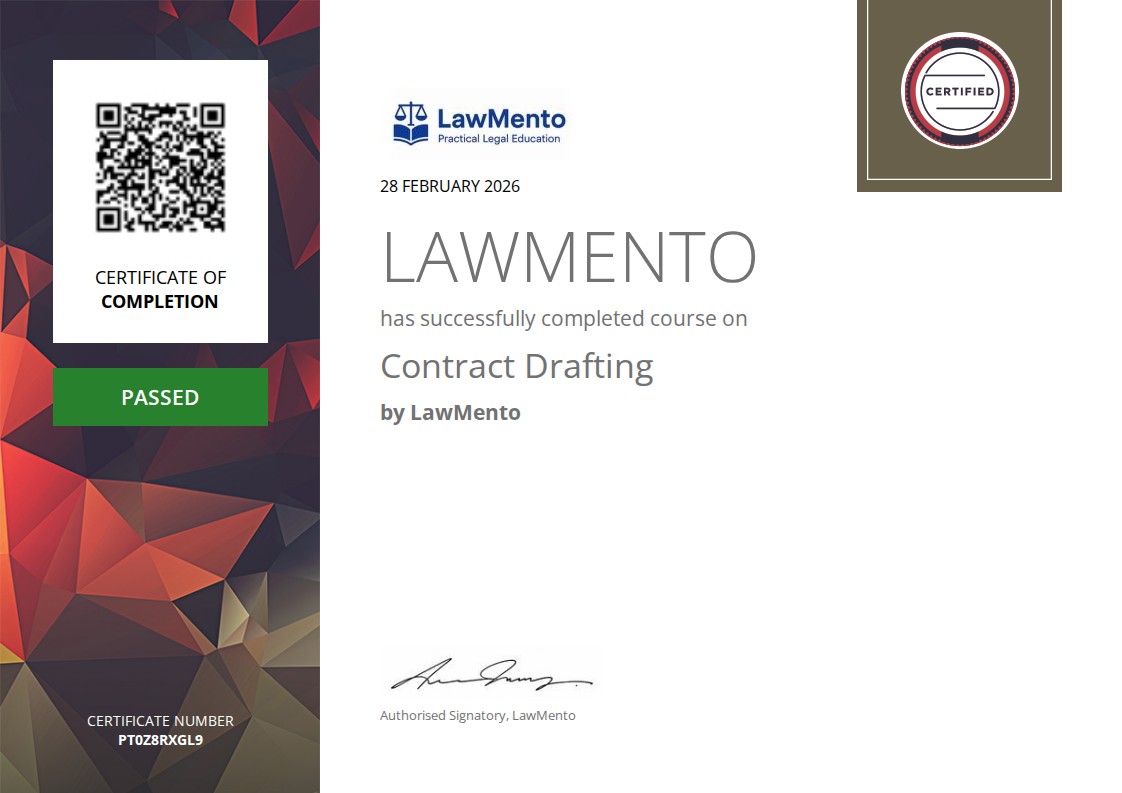
Add a Verifiable LawMento Certificate to Your Profile
Each LawMento certificate includes the learner’s name, course title, completion date, authorised signature, unique certificate number and QR code. It can be added to a CV, LinkedIn profile or professional portfolio as evidence of continued skill development.
Questions About the ChatGPT for Law Students Course
What is included in this ChatGPT course for law students?
The course includes 7+ hours of structured learning, seven modules, 5+ reading resources, practical examples, one-year access and a certificate of completion.
Is the free version of ChatGPT enough for this course?
Yes. The course is designed around the free version of ChatGPT, although some features may also be relevant to paid versions.
Is this course suitable for beginners?
Yes. It begins with the fundamentals and gradually introduces practical workflows for legal research, writing, mooting, revision and career preparation.
Does the course cover legal research and case analysis?
Yes. It explains how to understand, analyse, compare and summarise cases while checking the accuracy of AI-generated information.
Will the course help with CVs and internship applications?
Yes. It includes guidance on tailoring CVs, improving LinkedIn profiles, writing cold emails and drafting statements of purpose.
Does the course explain the risks of using AI?
Yes. It covers hallucinations, inaccurate citations, plagiarism, fact-checking, institutional policies and the need for independent verification.
When will course access be provided?
Access is provided immediately after successful payment. Learners should check the email address used during enrolment.
How long will I have access?
The course remains accessible for one year from enrolment.
Start Learning ChatGPT for Law Students
Join the online certificate course and receive immediate access to the curriculum, resources and certificate pathway.