
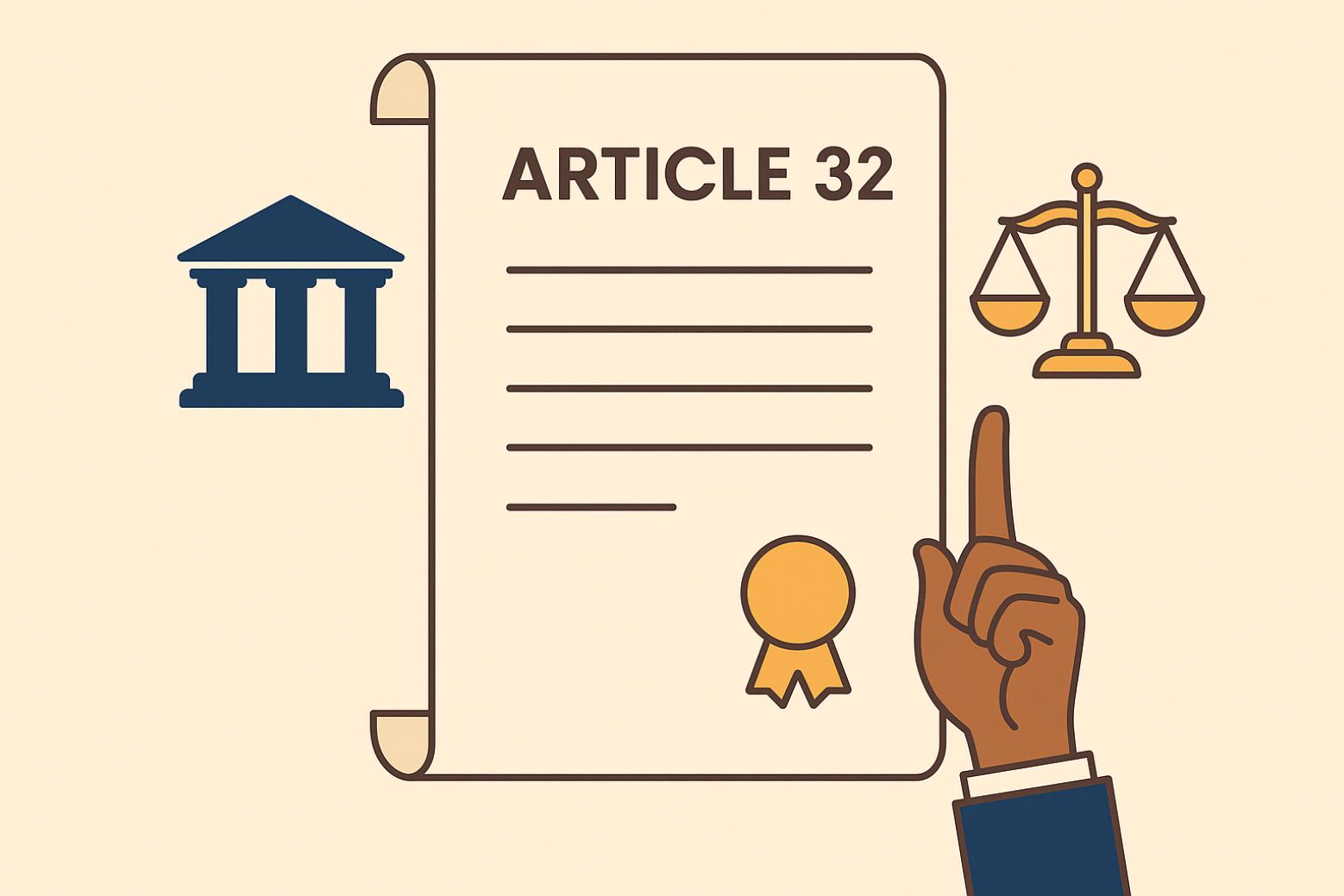
Article 32 – The Right to Constitutional Remedy
Understand the heart of constitutional remedies in India. This masterclass explains the scope, writ jurisdiction, landmark judgments and practical relevance of Article 32 in protecting Fundamental Rights.
About the Article 32 Masterclass
Article 32 of the Constitution of India guarantees the right to move the Supreme Court for the enforcement of Fundamental Rights.
Dr. B.R. Ambedkar described Article 32 as the “heart and soul” of the Constitution because of its central role in safeguarding individual liberties.
This masterclass provides a structured understanding of the scope, nature and practical operation of Article 32, including writ jurisdiction, locus standi, public interest litigation and judicial interpretation.
By the end of the session, learners will be able to analyse the constitutional significance of Article 32, understand its procedural aspects and evaluate important judgments that have shaped its interpretation.
Core Areas Covered
- Meaning and constitutional importance of Article 32
- Enforcement of Fundamental Rights
- Supreme Court writ jurisdiction
- Locus standi and public interest litigation
- Types of constitutional writs
- Landmark judicial interpretations
Understand the Constitutional Remedy That Protects Fundamental Rights
Learn how Article 32 operates, when the Supreme Court may be approached and how constitutional writs protect individual liberty.
What Learners Can Understand
The masterclass builds a clear foundation in the constitutional purpose, scope and practical application of Article 32.
Explain Article 32
Understand why Article 32 is itself a Fundamental Right and how it supports constitutional protection.
Understand Writs
Recognise the different constitutional writs available for the enforcement of Fundamental Rights.
Assess Jurisdiction
Understand the role and jurisdiction of the Supreme Court when relief is sought under Article 32.
Identify Applicants
Understand who may approach the Supreme Court and the relevance of locus standi.
Study PIL
Understand the relationship between Article 32 and public interest litigation.
Analyse Remedies
Evaluate the scope of relief available for violations of Fundamental Rights.
Read Judgments
Connect landmark judgments with the development and interpretation of Article 32.
Apply Concepts
Use the principles of Article 32 in academic study, legal research and constitutional analysis.
Designed for Learners Interested in Constitutional Law
Law Students
Suitable for students seeking a stronger understanding of constitutional law and Fundamental Rights.
Legal Professionals
Useful for professionals who want to revisit constitutional remedies and Supreme Court jurisdiction.
Academics and Researchers
Relevant for learners engaged in constitutional studies, legal writing and judicial research.
Constitutional Law Learners
Suitable for anyone interested in Fundamental Rights, writs and the role of the Supreme Court.
Learn Article 32 Through a Focused Masterclass
Receive structured lessons, reading resources, a certificate pathway and one-year access.
Article 32 Masterclass Curriculum
The session moves from constitutional foundations to writ remedies, Supreme Court jurisdiction and landmark judgments.
Part 1: Constitutional Foundations and Fundamental Rights
- Overview of the Constitution of India
- Importance of Fundamental Rights
- Meaning of Article 32
- Why Article 32 is called the Right to Constitutional Remedy
- Its significance in protecting Fundamental Rights
Part 2: Access to the Supreme Court and Scope of Relief
- Who can approach the Supreme Court under Article 32?
- Locus standi and access to constitutional remedies
- Scope of the remedy available under Article 32
- Public interest litigation and constitutional enforcement
Part 3: Writ Jurisdiction and Judicial Role
- Different types of writs available under Article 32
- Role of the Supreme Court in granting constitutional writs
- Enforcement of Fundamental Rights through judicial remedies
- Procedural and practical aspects of writ jurisdiction
Part 4: Landmark Judgments on Article 32
- Important judicial interpretations of Article 32
- Development of constitutional remedies through case law
- How landmark judgments have shaped the scope of Article 32
What the Masterclass Connects
Fundamental Rights
How Article 32 provides a direct constitutional mechanism for enforcing protected rights.
Supreme Court Jurisdiction
The Court’s power to examine rights violations and grant appropriate constitutional relief.
Constitutional Writs
The role of writ remedies in preventing unlawful action and protecting liberty.
Locus Standi
Who may approach the Court and how standing operates in constitutional proceedings.
Public Interest Litigation
The wider use of constitutional remedies to address matters affecting public rights.
Judicial Interpretation
How the Supreme Court has developed the meaning and reach of Article 32.
Procedural Understanding
The basic procedural framework involved in seeking constitutional remedies.
Legal Research
Using Article 32 principles and judgments in constitutional law study and writing.
Meet the Mentor
Mr. Kush Kalra
Mr. Kush Kalra holds a Limca Book of Records distinction for writing the most law books published in a year. His books have been published by reputed publishers including Thomson Reuters and Bloomsbury and are available through online platforms. He has also received the National Youth Award from the Government of India and the Duke of Edinburgh Gold Standard Award.
Strengthen Your Understanding of Constitutional Remedies
Study Article 32, writ jurisdiction and landmark judicial developments in one focused session.
Add a Verifiable LawMento Certificate to Your Profile
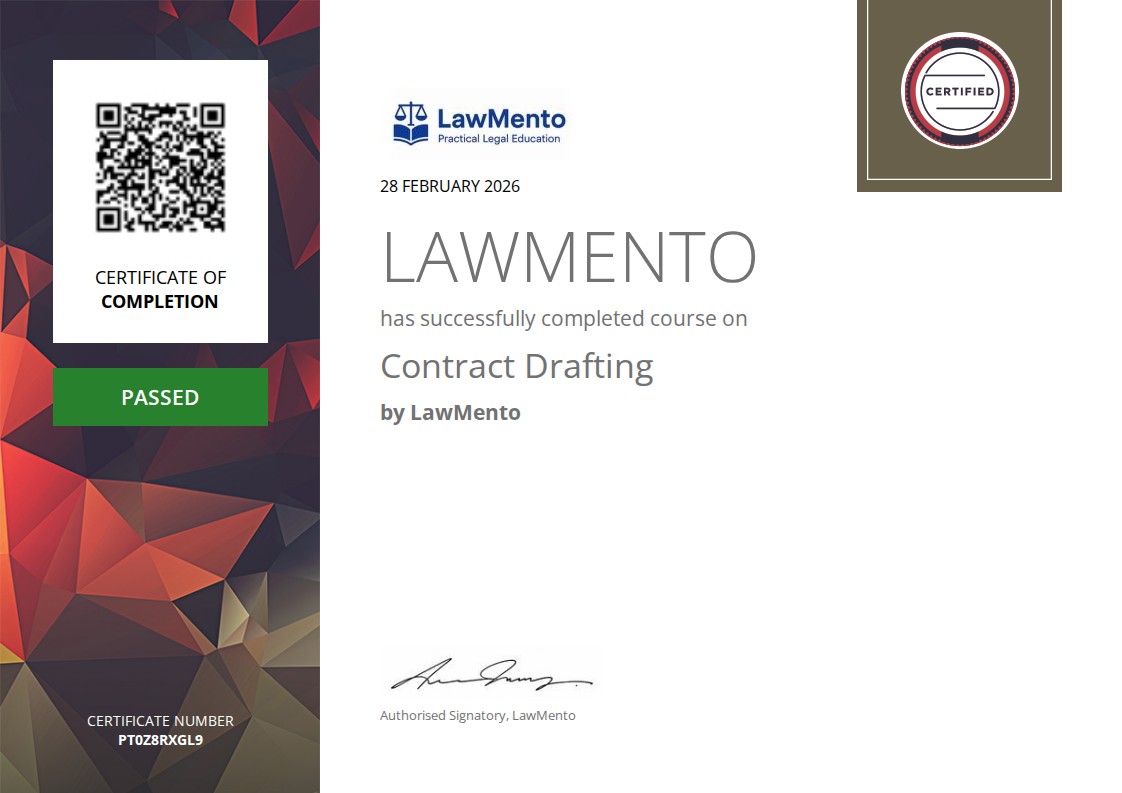
Each LawMento certificate includes the learner’s name, course title, completion date, authorised signature, unique certificate number and QR code. It can be added to a CV, LinkedIn profile or professional portfolio as evidence of continued legal learning.
Questions About the Article 32 Masterclass
What does the Article 32 masterclass cover?
It covers the constitutional importance of Article 32, Fundamental Rights, Supreme Court jurisdiction, locus standi, public interest litigation, writ remedies and landmark judgments.
Who is this masterclass suitable for?
It is suitable for law students, legal professionals, academics, researchers and anyone interested in constitutional remedies and Fundamental Rights.
How long is the masterclass?
The masterclass includes more than one hour of structured learning.
Are reading resources included?
Yes. The masterclass includes one or more reading resources.
Does the masterclass provide a certificate?
Yes. Learners receive a certificate of completion after satisfying the applicable completion requirements.
When will access be provided?
Access is provided immediately after successful enrolment. Learners should check the email address used during enrolment.
How long will the masterclass remain accessible?
The masterclass remains accessible for one year from enrolment.
What is the fee?
The regular masterclass fee is ₹99, but it is currently available FREE for a limited time.
Start Learning Article 32
Join the online masterclass and receive immediate access to the session, reading resources and certificate pathway.